


What's Happening?
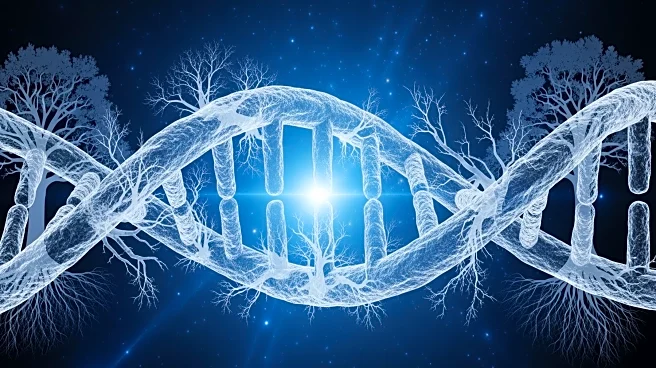
Recent genetic studies have uncovered 'ghost lineages' in human DNA, revealing a complex evolutionary history. These ghost lineages refer to extinct populations that have left no fossils but whose genetic traces are present in the genomes of modern humans
and other primates. Researchers have found that these ancient groups contributed genes to surviving populations, complicating the previously understood linear model of human evolution. The discovery of ghost lineages has been largely accidental, as scientists studying the evolution of extinct animals like mammoths and lemmings have detected these ancient populations through genetic analysis.
Why It's Important?
The identification of ghost lineages has revolutionized the study of human evolution, suggesting a more intricate evolutionary process than previously thought. This discovery challenges the traditional view of human evolution as a steady progression and introduces a 'bushier' model with multiple interbreeding events. Understanding these genetic contributions can provide insights into the genetic diversity and adaptability of human populations, influencing fields such as anthropology, genetics, and evolutionary biology. It also underscores the impact of past climate changes on present-day biodiversity, highlighting the importance of ancient DNA research in understanding evolutionary history.
Beyond the Headlines
The concept of ghost lineages extends beyond human evolution, offering insights into the genetic diversity of other species during the last ice age. This research illustrates how past climate changes have shaped current biodiversity, emphasizing the need for ancient DNA approaches to quantify historical changes. The study of ghost lineages also raises ethical and scientific questions about the interpretation of genetic data and the reconstruction of evolutionary histories. As more ghost lineages are identified, the evolutionary 'tree' becomes more complex, prompting a reevaluation of how scientists understand the interconnectedness of ancient populations.