







What's Happening?
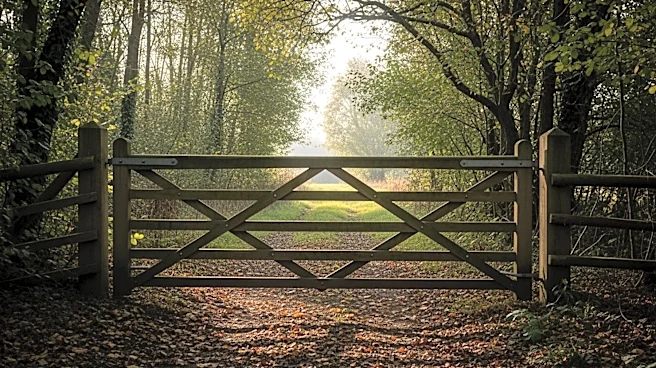
Pippa Middleton and her husband, James Matthews, have come under fire from their local community after closing a public footpath on their estate, Barton Court, in the UK. The couple purchased the 145-acre estate in 2022 and subsequently sealed the entrance
to a footpath known as Mill Lane, citing privacy concerns. This move has sparked controversy, as the path has been used by locals for decades to safely travel between nearby areas. The Ramblers' Association, a prominent walking charity, has joined forces with community members to challenge the closure, arguing that it forces pedestrians to use a road without sidewalks, increasing the risk of accidents. The local council initially sided with the community, but Matthews is contesting this decision, with a planning inspector set to review the case in May.
Why It's Important?
The closure of Mill Lane highlights the ongoing tension between private property rights and public access in rural areas. For the local community, the path is not just a convenience but a crucial safety measure, as it provides a pedestrian-friendly route that avoids busy roads. The dispute underscores the broader issue of how landowners balance their privacy and security needs with community interests. The outcome of this case could set a precedent for similar disputes, affecting how public pathways are managed on private lands across the UK. Additionally, the situation reflects the challenges faced by high-profile individuals in maintaining privacy while living in areas with established public access traditions.
What's Next?
The case will be reviewed by a planning inspector in May, where Matthews will argue against the council's decision to keep Mill Lane open to the public. The outcome could influence future decisions on public access to private lands. If the inspector rules in favor of the community, it may encourage other local councils to uphold public access rights in similar situations. Conversely, a decision favoring Matthews could embolden other landowners to restrict access to paths crossing their properties. The decision will likely be closely watched by both property rights advocates and public access supporters.