







What's Happening?
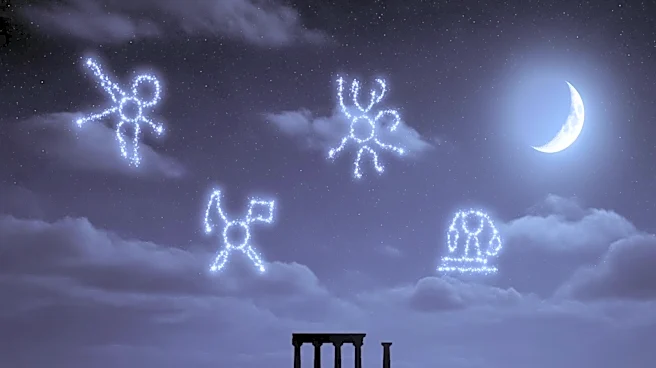
As spring arrives, several constellations with rich mythological backgrounds become prominent in the night sky. These include Bootes, associated with a herdsman in Greek mythology; Corona Borealis, representing the crown of Ariadne; Leo, linked to the Nemean
Lion slain by Heracles; and Hydra, the longest constellation, also tied to Heracles' labors. Each constellation carries stories from various cultures, such as the Greek, Chinese, and Native American traditions. Stargazers can locate these constellations using familiar star patterns like the Big Dipper to find Arcturus in Bootes or the sickle shape of Leo.
Why It's Important?
Understanding the mythology behind constellations enriches the stargazing experience by connecting modern observers with ancient cultures and their interpretations of the night sky. These stories reflect humanity's long-standing fascination with the stars and the desire to find meaning in the cosmos. The cultural significance of these constellations highlights the diverse ways different societies have viewed the same celestial patterns, offering insights into their beliefs and values. This knowledge can enhance educational programs and inspire interest in both astronomy and cultural history.
What's Next?
As the spring constellations continue to be visible, stargazers are encouraged to explore these celestial patterns and their stories. The potential nova explosion in the Corona Borealis constellation, expected around June 25, could provide an exciting observational opportunity. This event, along with the ongoing visibility of these constellations, offers a chance for educational outreach and public engagement in astronomy. Amateur astronomers and educators can use these opportunities to foster a deeper appreciation for the night sky and its historical significance.