



What's Happening?
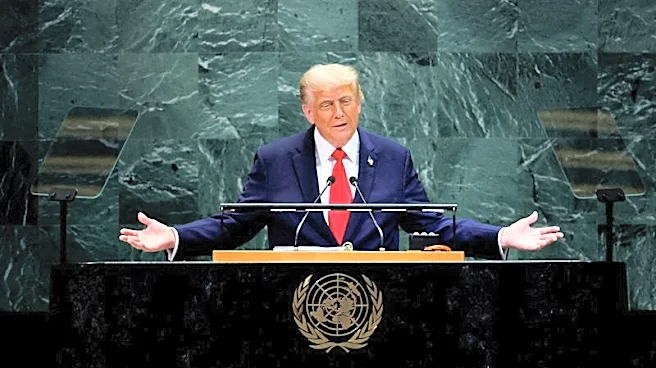
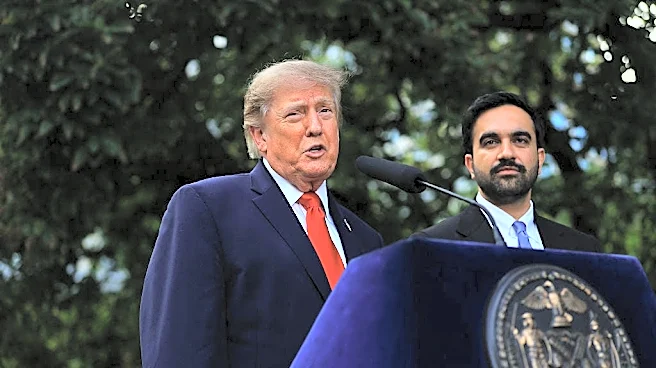
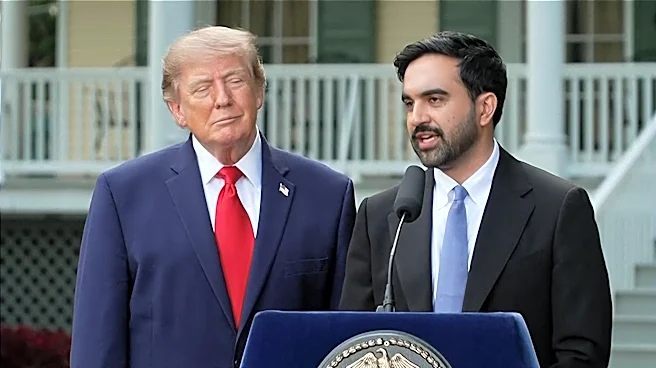
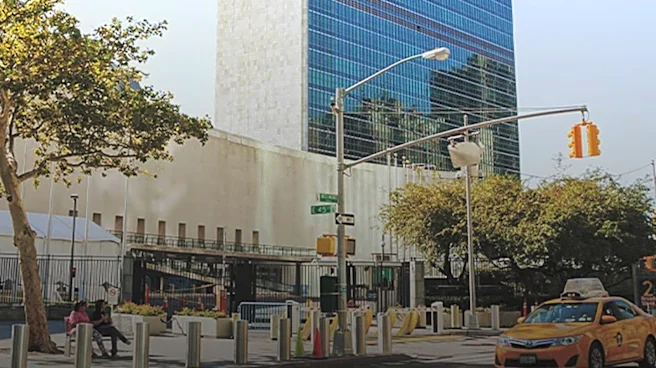
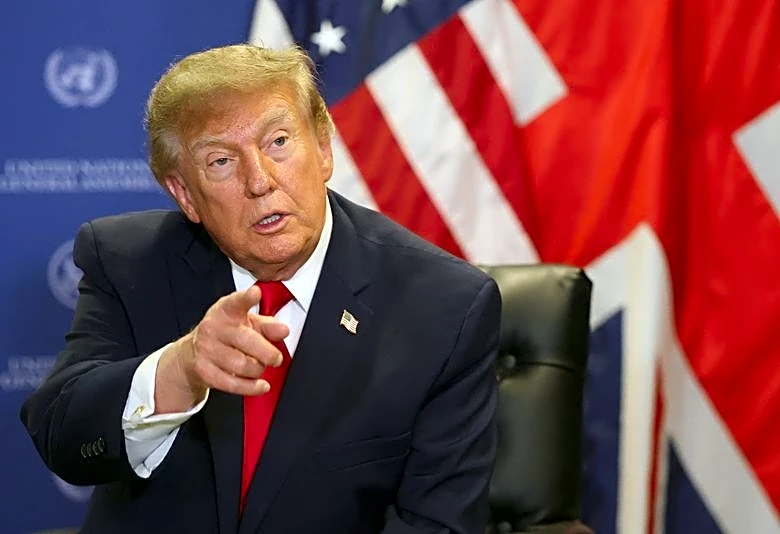
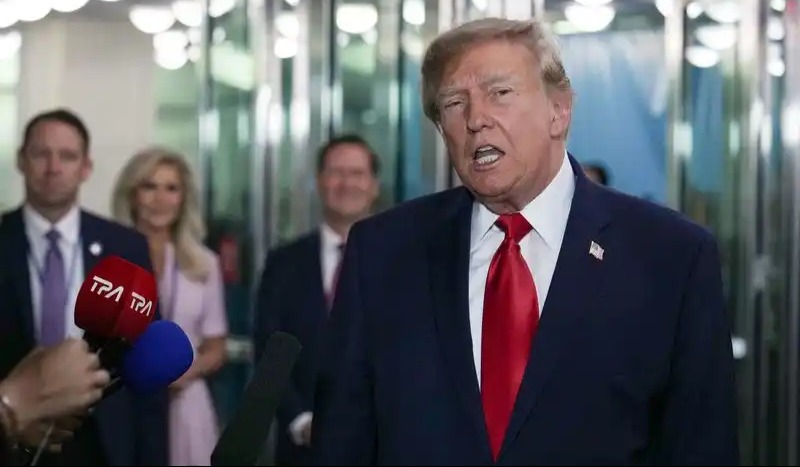
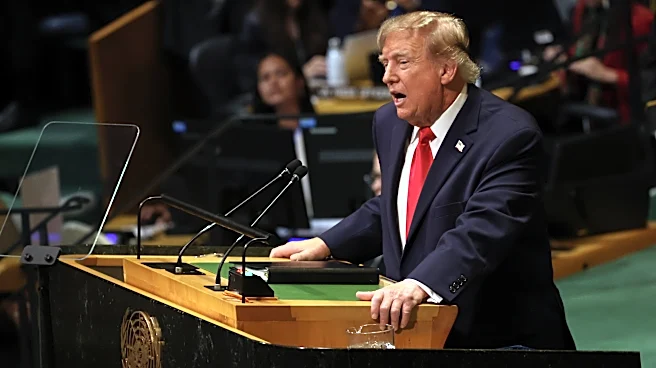
New York City Mayor Zohran Mamdani is scheduled to meet with President Trump on Monday at Gracie Mansion, the mayoral residence in Manhattan. This meeting precedes President Trump's address at the United Nations General Assembly on Tuesday. A spokesperson
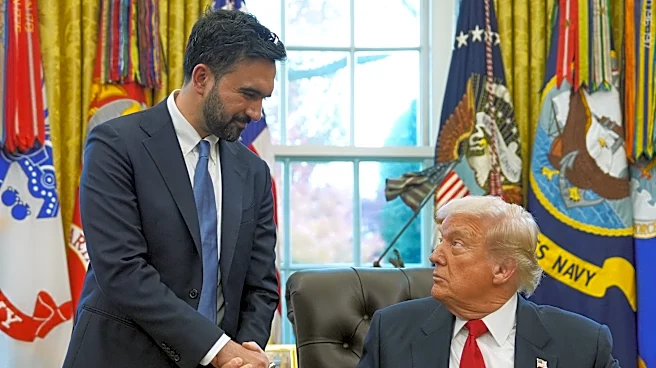
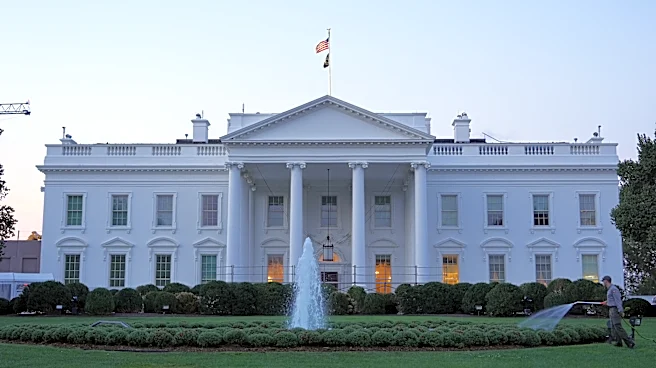
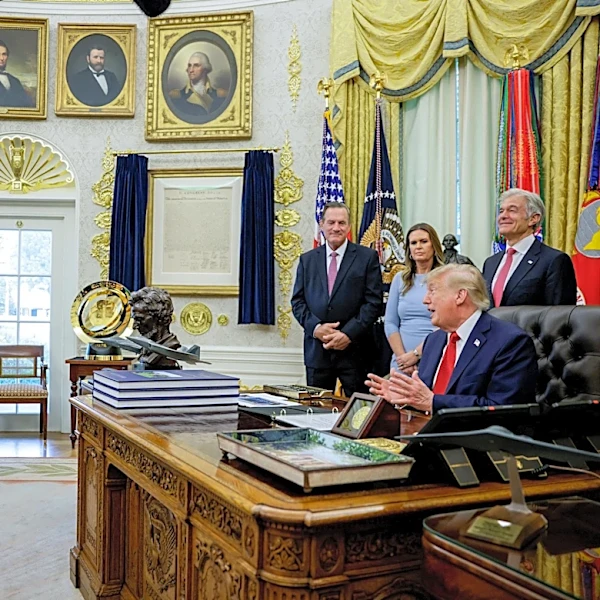
for Mayor Mamdani stated that the discussion will focus on issues affecting New York City and its residents. This marks the third in-person meeting between Mamdani and President Trump, with previous encounters occurring in the Oval Office in November 2025 and February. Despite their differing political ideologies, their interactions have been described as surprisingly amiable, with Mamdani's staff emphasizing a diplomatic approach that has reportedly benefited the city. The White House confirmed the meeting but did not provide additional details.
Why It's Important?
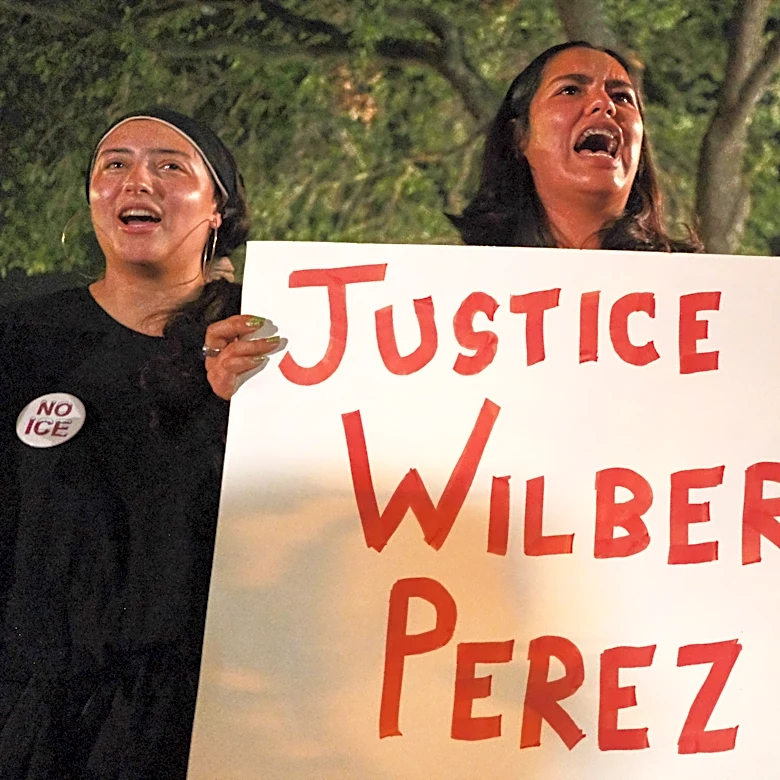
This meeting is significant due to the political contrast between Mayor Mamdani, a democratic socialist, and President Trump. Their continued engagement, despite ideological differences, highlights a pragmatic approach to governance where local and federal leaders seek common ground for the benefit of their constituents. The meeting's timing, just before the UN General Assembly, also places Mayor Mamdani in a prominent position on the international stage, drawing attention beyond New York City. The mayor's ability to secure commitments from the President, such as the release of a detained Columbia University student and discussions on a massive housing project, demonstrates the potential effectiveness of maintaining a working relationship even with political adversaries. This dynamic challenges the conventional narrative of partisan gridlock and suggests that direct communication can yield tangible results for urban centers, particularly on issues like immigration and federal funding for infrastructure.
What's Next?
The outcome of Monday's meeting will be closely watched to see if Mayor Mamdani's diplomatic approach continues to yield results for New York City. While the specific agenda remains undisclosed, past discussions have included immigration policies and federal grants for housing projects. The meeting's proximity to Israeli Prime Minister Benjamin Netanyahu's address at the UN General Assembly adds another layer of context, though Mamdani has stated he will not participate in demonstrations against Netanyahu. Future interactions between the mayor and President Trump will likely be scrutinized for their impact on New York City's policy priorities and federal support. The ongoing lawsuit filed by Mamdani against the Trump administration regarding an expanded rule for green card eligibility indicates that while dialogue occurs, legal challenges on policy disagreements may also continue.
Beyond the Headlines
The recurring meetings between Mayor Mamdani and President Trump, despite their stark political differences, offer a compelling case study in political pragmatism and the complexities of intergovernmental relations. President Trump's seemingly contradictory stance, referring to Mamdani as 'my little communist' while also praising his stewardship of New York, suggests a strategic flexibility that prioritizes certain outcomes. This dynamic challenges the notion that political leaders must always adhere to strict ideological lines, especially when addressing the immediate needs of a major city. The mayor's success in extracting concessions or at least maintaining dialogue on critical issues like immigration and housing, even while pursuing legal action against the administration, highlights a nuanced approach to political engagement. This situation could influence how other local leaders interact with federal administrations, demonstrating that a willingness to engage, even with ideological opponents, can sometimes be more effective than outright confrontation in achieving local objectives.