





What's Happening?
China has developed a comprehensive legal framework over the past five years to enhance its capacity for economic retaliation. This includes the 2020 Unreliable Entity List, the 2021 Anti-Foreign Sanctions Law, and recent regulations on countering extraterritorial
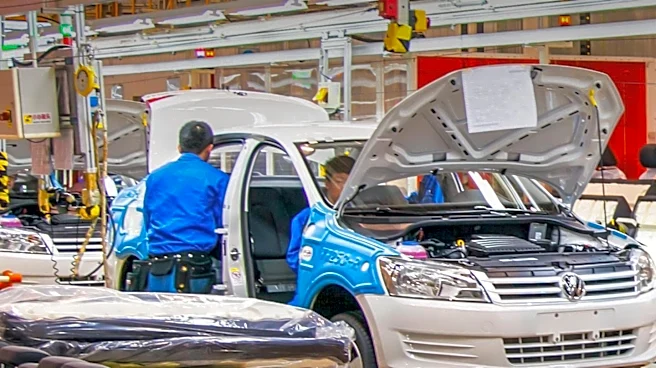
jurisdiction. These measures allow China to respond swiftly and on a large scale to international tensions, particularly affecting European economies. Germany's automotive and machinery sectors are notably vulnerable, with potential political repercussions anticipated during upcoming regional elections.
Why It's Important?
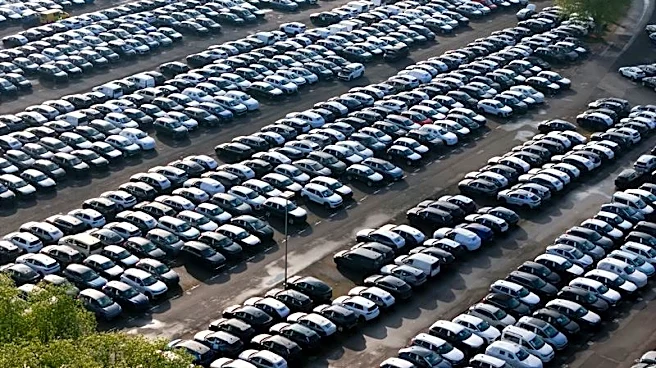
The expansion of China's retaliatory capabilities poses significant risks to European industries, especially those heavily reliant on the Chinese market. Germany's automotive sector, a cornerstone of its economy, faces challenges from reduced demand and increased competition from Chinese manufacturers. This could lead to economic instability and influence political dynamics within Germany, potentially affecting the stability of its current coalition government. The broader EU-China tensions may also impact trade policies and economic strategies across Europe.
What's Next?
The upcoming regional elections in Germany could serve as a barometer for the political impact of these economic challenges. European leaders may need to reassess their trade and diplomatic strategies with China to mitigate potential economic fallout. Additionally, businesses may seek to diversify their markets to reduce dependency on China, while policymakers might explore new alliances to counterbalance China's growing influence.