





What's Happening?
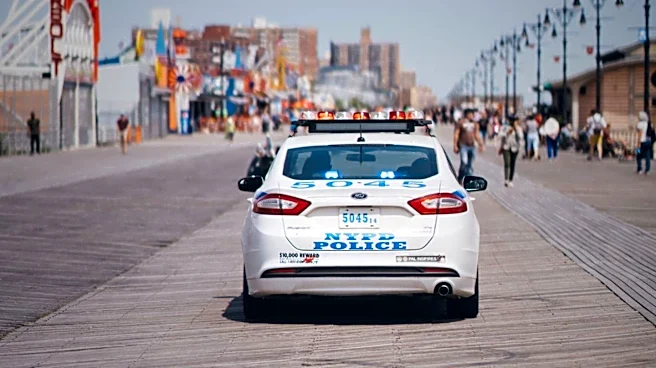
The New York City Council has reviewed recent crime statistics from the New York Police Department (NYPD), revealing a mixed trend in public safety. While post-pandemic murders and shootings have decreased citywide, reaching record lows in certain categories,
felony assaults have shown a consistent increase. This data presents a complex picture for law enforcement and city officials, indicating that while some forms of violent crime are declining, others are on the rise. The NYPD is currently evaluating its strategies and responses to address these evolving crime patterns. NBC New York’s Melissa Russo reported on the details of these statistics and the department's ongoing efforts to adapt to the changing criminal landscape in New York City.
Why It's Important?
The NYPD's crime statistics are important as they reflect the evolving public safety challenges in New York City and potentially other major U.S. urban centers. The reduction in murders and shootings is a positive indicator, suggesting that certain law enforcement strategies or societal changes are having a beneficial impact on the most severe forms of violent crime. However, the consistent increase in felony assaults presents a significant concern for residents and policymakers. This trend could impact public perception of safety, influence daily behaviors, and necessitate a re-evaluation of policing tactics and community intervention programs. The data also highlights the dynamic nature of crime, where success in one area does not automatically translate to overall crime reduction, requiring continuous adaptation and resource allocation from law enforcement agencies. The balance between addressing different types of crime is crucial for maintaining public trust and ensuring effective public safety.
What's Next?
In response to the detailed crime statistics, the NYPD will likely continue to refine its operational strategies to address the rising felony assault rates while maintaining the downward trend in murders and shootings. This could involve reallocating resources, implementing new community policing initiatives, or enhancing investigative techniques for assault cases. The New York City Council will likely continue its oversight, potentially holding further hearings to scrutinize the NYPD's plans and progress. Public discussions and debates about the effectiveness of current policies and the need for new approaches are also anticipated. Additionally, community organizations and advocacy groups may increase their calls for specific interventions, such as mental health services or violence prevention programs, to tackle the root causes of felony assaults. The ongoing challenge will be to develop comprehensive solutions that address the multifaceted nature of crime in a large metropolitan area.
Beyond the Headlines
The nuanced crime statistics in New York City underscore a broader societal challenge in understanding and combating crime. The decline in certain violent crimes alongside an increase in others suggests that crime is not a monolithic phenomenon but rather a collection of distinct issues driven by various factors. This complexity challenges simplistic solutions and calls for a more granular approach to public safety. It also highlights the potential impact of socio-economic factors, mental health crises, and post-pandemic societal shifts on criminal behavior. The focus on felony assaults, which can encompass a wide range of incidents, may also prompt a deeper examination of the definitions and reporting mechanisms of crime. Ultimately, this situation encourages a more sophisticated public discourse on crime, moving beyond headline figures to understand the underlying dynamics and develop targeted, evidence-based interventions that address the specific needs of communities.