



What's Happening?
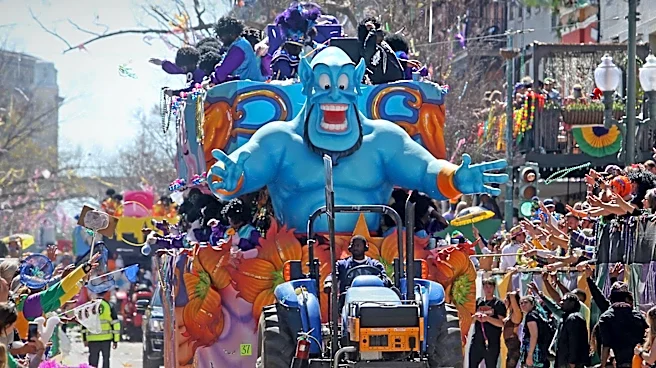
A new report, submitted by NOWCRJ and CLASP to the Mayor’s Office, City of New Orleans, details how the current systems for Mardi Gras cleanup labor have not adequately served the temporary workers essential to the city's signature celebration. The paper,
based on worker testimony and public records, identifies shortcomings in the conditions and treatment of these laborers. It proposes a two-part solution to address these issues. Part One outlines seven immediate actions the administration can take before Carnival 2027, utilizing existing authority, starting with a public Labor Compliance Audit of city contracts. This audit would be financed by remaining federal ARPA funds, which expire on December 31, 2026. Part Two introduces the New Orleans Fair Work Ordinance, designed to provide permanent protections for all temporary workers in the city, operating within the bounds of state preemption.
Why It's Important?
This report is crucial for addressing labor exploitation and ensuring fair treatment for temporary workers, particularly those involved in the demanding and often overlooked task of Mardi Gras cleanup. These workers are vital to the city's ability to host major events and maintain its public spaces, yet their working conditions have been found to be inadequate. Improving these conditions can enhance worker dignity, safety, and economic stability, contributing to a more equitable labor market. The proposed Labor Compliance Audit and the New Orleans Fair Work Ordinance could set a precedent for how temporary labor is managed in other sectors and cities, promoting greater transparency and accountability in contracting practices. This initiative also highlights the importance of utilizing available federal funds, like ARPA, to address critical social and labor issues before their expiration.
What's Next?
The immediate next steps involve the Mayor's Office reviewing the report and considering the proposed recommendations. The first action, a public Labor Compliance Audit of city contracts, would need to be initiated promptly to utilize the remaining federal ARPA funds before their December 31, 2026, expiration. This audit would scrutinize existing contracts to ensure compliance with labor laws and fair practices. Concurrently, the development and consideration of the New Orleans Fair Work Ordinance will be a key focus, aiming to establish permanent protections for temporary workers. This will likely involve discussions with city council members, labor organizations, and business stakeholders to draft and enact legislation that is both effective and legally sound within state regulations. The success of these measures will depend on political will and collaborative efforts to implement the proposed changes.
Beyond the Headlines
The issues raised in the report extend beyond Mardi Gras cleanup, touching upon the broader challenges faced by temporary and gig economy workers in the U.S. The call for a Fair Work Ordinance reflects a growing national conversation about worker protections in an evolving labor landscape. This initiative could inspire similar efforts in other cities that rely heavily on temporary labor for seasonal events or specific industries. Ethically, it underscores the responsibility of municipalities and contractors to ensure humane and equitable working conditions, regardless of employment duration. Legally, the proposed ordinance navigates the complexities of state preemption, highlighting the ongoing tension between local autonomy and state-level authority in labor regulation. Culturally, it reinforces the value of all labor, even the most transient, in contributing to the vibrancy and functionality of a city like New Orleans.