



What's Happening?
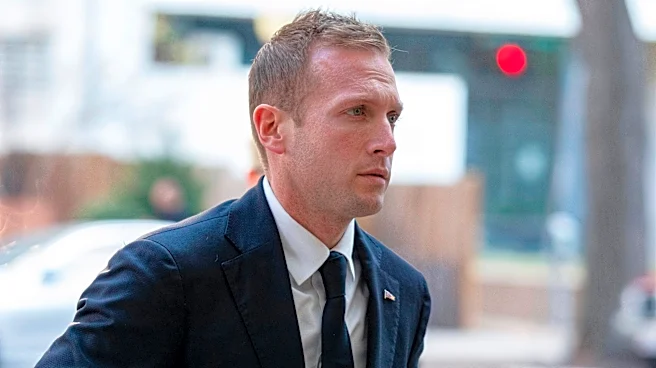
Joshua Bonehill-Paine, a former neo-Nazi activist, has withdrawn his candidacy for a local council election in Somerset after significant backlash. Bonehill-Paine, who was previously convicted of racially harassing Luciana Berger, a former Labour MP,
was selected by the Conservative Party to stand for election. His selection sparked outrage, particularly from Jewish groups and Baroness Berger, who criticized the decision. Bonehill-Paine, who has since renounced his past views and works with the Home Office on anti-radicalisation programs, stated that his candidacy would distract from his current work. He has been offered a position as an anti-extremism adviser to the Conservative Party.
Why It's Important?
The controversy surrounding Bonehill-Paine's candidacy highlights the challenges political parties face in balancing rehabilitation and public perception. The backlash underscores the sensitivity around issues of antisemitism and the importance of vetting candidates with controversial pasts. The Conservative Party's decision to initially support Bonehill-Paine reflects a belief in second chances, but the subsequent withdrawal indicates the potential political cost of such decisions. This incident may influence how parties approach candidate selection, particularly for individuals with histories of hate speech or extremist views.
What's Next?
Bonehill-Paine's withdrawal may lead to further scrutiny of the Conservative Party's candidate selection process. The party may need to reassess its policies on rehabilitation and public representation to avoid similar controversies. Additionally, the role of Bonehill-Paine as an anti-extremism adviser could be closely monitored to ensure it aligns with the party's values and public expectations. The incident may also prompt broader discussions on how political parties can effectively integrate individuals with reformed extremist views into public service roles.