


What's Happening?
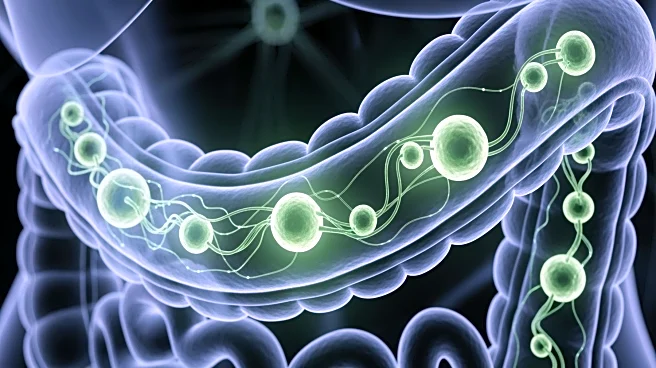
New research published in Nature has identified a significant role for gut macrophages in the development and propagation of alpha-synuclein pathology in body-first Parkinson's disease (PD). The study suggests that these immune cells in the gastrointestinal
system are crucial in the early stages of the disease, providing new opportunities for biomarkers and therapeutic targeting. The research builds on the 'gut-first' versus 'brain-first' hypothesis of PD, indicating that non-neuronal cells may play a more significant role in the disease's pathogenesis than previously thought.
Why It's Important?
This discovery could revolutionize the understanding and treatment of Parkinson's disease by shifting the focus to the gut as a critical area for early intervention. Identifying gut macrophages as key players in PD pathogenesis opens new avenues for developing biomarkers that could lead to earlier diagnosis and more effective treatments. This research may also prompt a reevaluation of current therapeutic strategies, potentially leading to the development of treatments that target the gut-brain axis. The findings highlight the importance of considering the gut's role in neurodegenerative diseases, which could have broader implications for other conditions.
What's Next?
Future research will likely focus on developing therapies that target gut macrophages to prevent or slow the progression of Parkinson's disease. Clinical trials may be designed to test the efficacy of such treatments, potentially leading to new standards of care for PD patients. Additionally, researchers may explore the role of gut macrophages in other neurodegenerative diseases, expanding the potential impact of these findings. The study could also lead to increased collaboration between neurologists and gastroenterologists in managing Parkinson's disease.