






What's Happening?
The 58th Division for Planetary Sciences (DPS) meeting in Spokane, WA, featured significant updates across various fields of planetary science. The Mars Reconnaissance Orbiter (MRO) is celebrating 20 years at Mars, continuing its mission to study surface
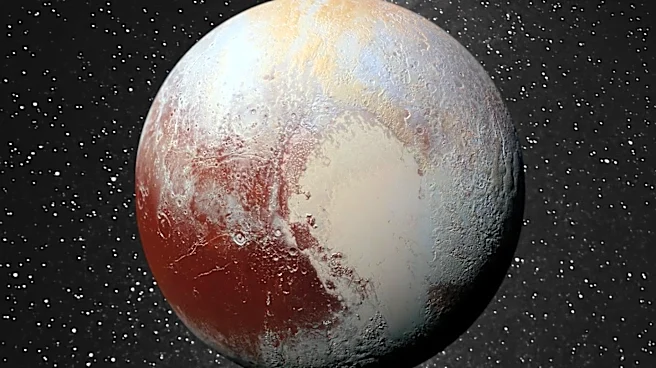
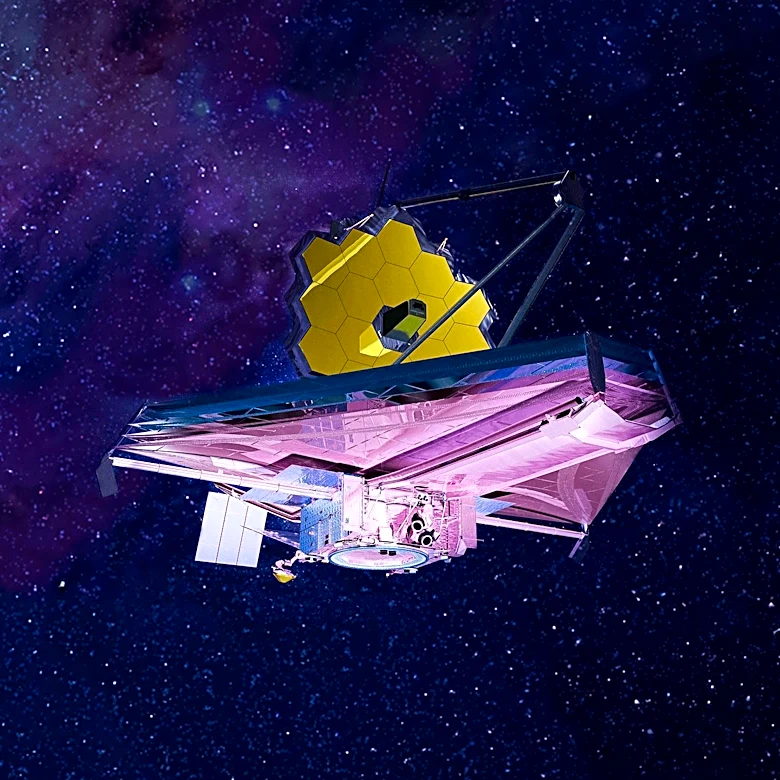
and climate change, ice, volcanics, and atmospheric conditions. The Juno mission provided new insights into Jupiter's moon Io, suggesting that it does not have a global magma ocean, though thin layers or scattered pockets of magma remain possibilities. Research on Europa, another Jovian moon, combined Juno data with models to map its ice shell thickness, finding variations from 21 to 31 km, with the thinnest regions overlapping with 'chaos' terrain. The meeting also highlighted studies on interstellar objects, with observations of 3I/ATLAS by JWST, SPHEREx, and XMM-Newton revealing its unique composition and formation in an exceedingly cold, low-metallicity region of its home galaxy. The Vera C. Rubin Observatory's early data has led to the discovery of super-fast and ultra-fast rotating asteroids, predominantly C-type, and a new dwarf planet candidate, 2026 ED138, which is among the brightest trans-Neptunian objects known. Additionally, the DPS workforce survey provided updates on the demographics and diversity within the planetary science community, noting an increase in diversity but still lagging behind the overall U.S. labor force.
Why It's Important?
The discoveries presented at the DPS 58 meeting have far-reaching implications for our understanding of the solar system and beyond. The MRO's continued operation provides invaluable long-term data on Mars, crucial for future human missions and understanding planetary evolution. The findings on Io and Europa contribute to the ongoing search for extraterrestrial life, as the presence and characteristics of subsurface oceans are key indicators of habitability. The study of interstellar objects like 3I/ATLAS offers a unique window into the chemical history and planet formation processes of other galaxies, providing context for our own solar system's origins. The Vera C. Rubin Observatory's rapid discovery rate of new asteroids and dwarf planet candidates underscores its potential to revolutionize our knowledge of the outer solar system and asteroid populations. Furthermore, the DPS workforce survey highlights the critical need for increased diversity and inclusion within scientific fields, ensuring a broader range of perspectives and talents contribute to future discoveries. These advancements collectively push the boundaries of space exploration and scientific inquiry, inspiring public interest and potentially informing future space policies and missions.
What's Next?
Future research will build upon the findings presented at DPS 58. The MRO will continue its extended mission, providing more data on Mars's dynamic environment. Further analysis of Juno data and new missions to the Jovian moons will aim to definitively characterize Io's interior and Europa's ice shell, with implications for astrobiology. The Vera C. Rubin Observatory is expected to continue its rapid pace of discoveries, with follow-up observations planned for objects like 2026 ED138 to confirm its dwarf planet status and characterize its properties. JWST will take a final look at 3I/ATLAS as it exits the solar system, searching for signs of outgassing. The ongoing DPS workforce survey will continue to monitor and advocate for increased diversity within planetary science, with future surveys providing updated statistics and insights. These efforts will collectively contribute to a more comprehensive understanding of planetary systems, both within and beyond our solar system, and foster a more inclusive scientific community. The data collected will also inform the planning and objectives of upcoming space missions.
Beyond the Headlines
The insights from the DPS 58 meeting extend beyond individual scientific discoveries, touching upon broader themes of scientific methodology, technological advancement, and societal impact. The ability of missions like MRO and Juno to provide long-term data highlights the importance of sustained investment in space exploration. The study of interstellar objects challenges the anthropocentric view of our solar system, reminding us that our cosmic neighborhood is constantly interacting with material from other star systems. The rapid discoveries by the Vera C. Rubin Observatory exemplify the power of large-scale astronomical surveys and advanced data processing. The discussion on workforce diversity within planetary science underscores the ethical imperative for equitable representation in STEM fields, recognizing that diverse teams often lead to more innovative and robust scientific outcomes. These developments collectively contribute to a dynamic and evolving scientific landscape, where new technologies and inclusive practices are continually reshaping our understanding of the universe and our place within it.