




What's Happening?
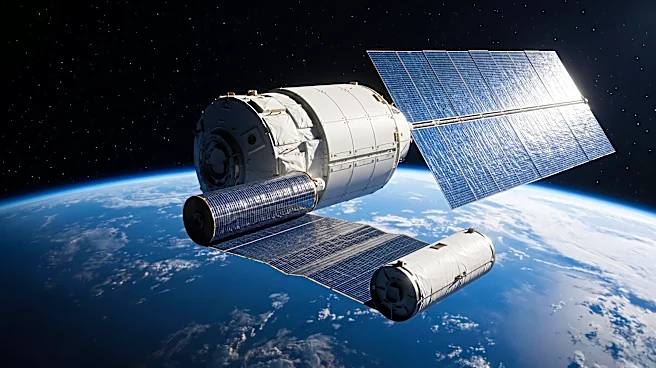
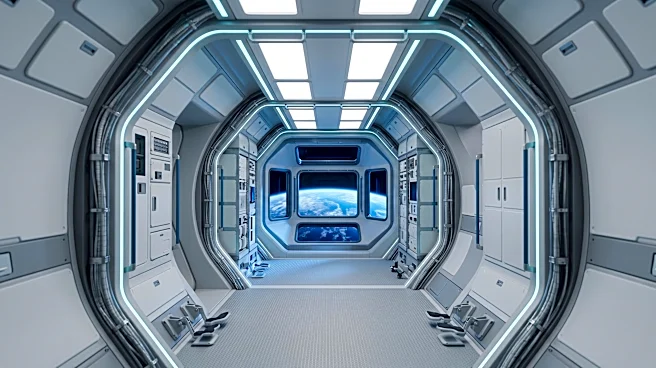
Flexcompute, a physics company, is partnering with Starlab Space and Voyager Technologies to simulate cabin airflow within Starlab, the commercial space station intended to replace the International Space Station (ISS). This collaboration focuses on modeling
the Environmental Control and Life Support System (ECLSS) to ensure proper air circulation and carbon dioxide removal in microgravity. Unlike traditional CFD tools, Flexcompute's GPU-native computational fluid dynamics (CFD) platform, Flow360, and its automated geometry preparation engine, GeometryAI, are being used to model the entire station's interior airflow. The initial studies have shown results consistent with Starlab's existing models but in a significantly reduced timeframe. The ongoing work aims to precisely track carbon dioxide movement and its removal by the life support system, a critical aspect given that Starlab is designed for a single-flight launch, necessitating a flawless design prior to deployment.
Why It's Important?
This collaboration is crucial for the future of commercial space exploration and the continued human presence in low Earth orbit. Accurate simulation of life support systems is paramount for the safety and comfort of astronauts on Starlab. The ability to conduct these complex simulations rapidly and accurately using Flexcompute's GPU-native technology allows for more thorough design validation and optimization before the physical construction and launch of the space station. This reduces risks associated with untested designs and potentially saves significant time and resources. The success of Starlab, as a successor to the ISS, will demonstrate the viability of private sector involvement in space station operations and research, impacting future government and commercial space endeavors. The efficiency gained through advanced simulation also highlights a broader trend in aerospace engineering towards leveraging AI and high-performance computing for critical design challenges.
What's Next?
The immediate next steps involve extending the simulation work to model the movement of exhaled carbon dioxide within the Starlab cabin and how the life support system effectively removes it. This detailed analysis will further refine the ECLSS design. As Starlab progresses from the design phase into production, the insights gained from these simulations will be directly integrated into the station's development. The collaboration also sets a precedent for how commercial space ventures can leverage advanced computational physics to ensure the reliability and safety of their systems. Future developments may include further optimization of the ECLSS based on simulation results and potentially applying similar simulation methodologies to other critical systems within Starlab or future commercial space platforms.
Beyond the Headlines
The use of GPU-native simulation platforms like Flow360 for critical space station life support systems signifies a deeper shift in engineering design and validation. It underscores the increasing reliance on advanced computational methods to tackle challenges that are difficult or impossible to test fully on Earth. This approach not only accelerates design cycles but also enhances the confidence in the performance of complex systems in extreme environments. Ethically, ensuring the highest level of safety and habitability for astronauts through rigorous simulation is a core responsibility. Culturally, this collaboration represents a growing trend of private companies taking on roles traditionally held by government space agencies, pushing the boundaries of innovation in space exploration. The ability to simulate and optimize such intricate systems also has implications for other high-stakes engineering fields, potentially leading to safer and more efficient designs across various industries.