
What's Happening?
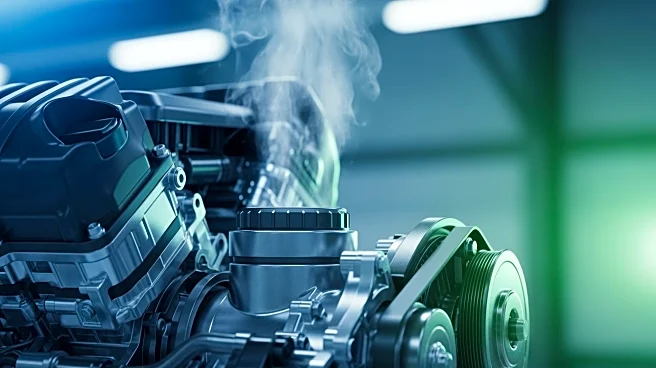
Japan Engine Corporation (J-ENG) has initiated the development of a methanol-fueled engine, the UEC50LSJM, as part of its efforts to innovate in the field of low-carbon maritime technology. This development follows
the completion of J-ENG's first ammonia-fueled engine, the 7UEC50LSJA, earlier this year. The company is also working on a hydrogen-fueled engine, the 6UEC35LSGH, which is expected to be completed by fiscal year 2027. Methanol is recognized for its potential to significantly reduce greenhouse gas emissions, as well as sulfur oxides, nitrogen oxides, and particulate matter. Its liquid state at normal temperatures and pressures makes it easy to handle, and it is anticipated to be used in various ship types, including medium and small-sized vessels. The development of these engines is part of J-ENG's strategy to contribute to the shipping industry's carbon neutrality goals by 2050.
Why It's Important?
The development of methanol-fueled engines by J-ENG is a significant step towards reducing the environmental impact of the shipping industry, which is a major contributor to global greenhouse gas emissions. By providing a viable alternative to traditional fossil fuels, methanol engines can help the industry transition to more sustainable practices. This innovation not only supports Japan's shipping and shipbuilding sectors but also aligns with global efforts to achieve carbon neutrality. The use of methanol, particularly green methanol derived from biomass and renewable energy, could lead to substantial reductions in emissions, benefiting both the environment and public health. As the shipping industry seeks to comply with stricter environmental regulations, the adoption of such technologies could become increasingly important.
What's Next?
J-ENG plans to continue its development of next-generation fuel engines, with the hydrogen-fueled engine expected to be completed by fiscal year 2027. The company aims to introduce these engines to the market, supporting the growth of Japan's shipping and shipbuilding industries while contributing to global efforts to reduce greenhouse gas emissions. As the industry moves towards carbon neutrality, the adoption of methanol and other alternative fuels is likely to increase. Stakeholders in the maritime sector, including shipbuilders, operators, and regulators, will need to collaborate to facilitate the transition to these new technologies and ensure their widespread implementation.