





What's Happening?
Azerbaijan and Uzbekistan are significantly deepening their strategic partnership, marked by President Ilham Aliyev's recent visit to Uzbekistan for the third meeting of the Azerbaijan-Uzbekistan Supreme Interstate Council. This visit saw the launch of new
projects and the signing of the 'Eternal Friendship Agreement,' which commits both nations to respecting each other's sovereignty, security, and territorial integrity, and opposing the use of third-country territories to threaten the other's security. The agreement also outlines broad cooperation across various sectors including education, trade, investment, energy, transport, logistics, information and communication technologies, and space technologies. This builds upon an indefinite alliance agreement signed in 2024, which includes political solidarity, foreign policy coordination, security consultations, and defense cooperation. Economic ties are also strengthening, with the Azerbaijan-Uzbekistan Investment Fund established in 2023 and a target to raise bilateral trade turnover to $1 billion by 2030. Notably, Azerbaijan plans to invest $5 billion in Uzbekistan's tourism sector, and there's a focus on transferring Uzbekistan's automotive sector experience to Azerbaijan.
Why It's Important?
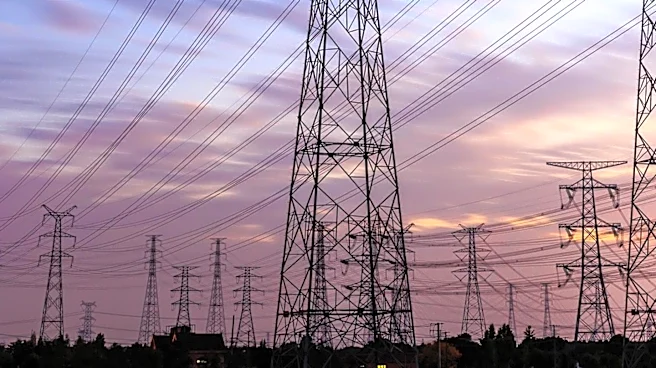
This enhanced partnership between Azerbaijan and Uzbekistan holds significant implications for regional geopolitics and energy markets, particularly for Europe. Azerbaijan aims to solidify its role as a transit and energy hub, facilitating the delivery of Central Asian energy resources to European markets. Key to this ambition are Trans-Caspian energy projects, including the interconnection of energy systems among Azerbaijan, Kazakhstan, and Uzbekistan, and the proposed high-voltage electric cable under the Caspian Sea. These initiatives could unlock new avenues for transmitting Central Asia's renewable energy potential to Europe, diversifying Europe's energy supply and potentially reducing its reliance on other sources. The 'Eternal Friendship Agreement' and broader strategic alignment also contribute to stability and economic connectivity within the Turkic world and between Central Asia and Europe. The increased trade and investment, particularly in energy and infrastructure, could foster economic growth in both countries and create new trade routes, impacting global supply chains and energy security.
What's Next?
The immediate focus will be on the implementation of the numerous agreements and announced projects. This includes advancing the Trans-Caspian energy projects, such as the interconnection of energy systems and the laying of the sub-Caspian electric cable, which will be crucial for Azerbaijan's goal of becoming a major energy transit hub to Europe. Further development of the Azerbaijan-Uzbekistan Investment Fund and efforts to achieve the $1 billion bilateral trade target by 2030 will also be closely monitored. The coordination of foreign policy and defense cooperation outlined in the alliance agreement suggests ongoing diplomatic and military-technical engagements. Additionally, the cultural initiatives, such as the opening of schools and strengthening educational institutions, indicate a continued effort to deepen cultural ties alongside economic and strategic ones. The success of these initiatives could further solidify the partnership as a key pillar of economic and strategic connectivity between Central Asia and Europe.
Beyond the Headlines
The deepening strategic partnership between Azerbaijan and Uzbekistan extends beyond immediate economic and energy benefits, signaling a broader geopolitical shift towards greater regional integration and self-reliance within the Turkic world. The 'Eternal Friendship Agreement' and the institutionalized cooperation mechanisms, such as the Supreme Interstate Council, reflect a long-term vision for political and economic solidarity that could reshape regional power dynamics. This alliance could serve as a counterweight to other regional influences, fostering a more independent and interconnected Central Asia and Caucasus. The emphasis on cultural diplomacy, through initiatives like educational exchanges and mutual language support, underscores an effort to build a strong public foundation for political relations, promoting a shared identity and common interests. This comprehensive approach, encompassing economic, political, and cultural dimensions, suggests a strategic move towards creating a robust and resilient bloc capable of influencing broader Eurasian affairs and enhancing connectivity between East and West.