






What's Happening?
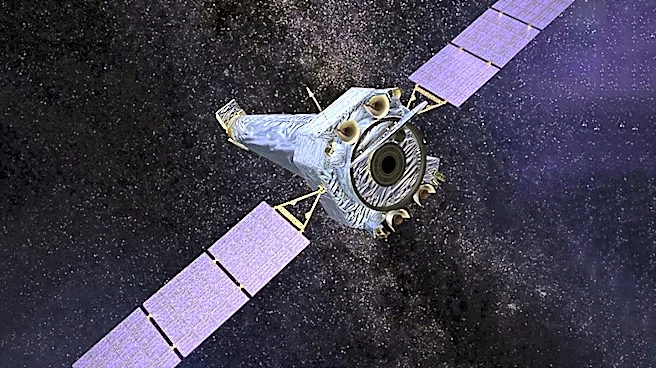
NASA's Swift gamma-ray telescope, which is on the brink of reentry, is facing challenges as its rescue mission encounters issues. The Link satellite, developed by Katalyst Space Technologies, was launched to save Swift from a fiery reentry. However, the satellite has
experienced problems with its attitude control, causing it to spin and resulting in sporadic communications. Two of Link's three reaction wheels are not operable, and there is some loss of functionality in its cold gas thruster system. Without a rescue, Swift is expected to reenter the atmosphere and burn up in the coming months.
Why It's Important?
The Swift Observatory is a crucial asset for detecting gamma-ray bursts, the most powerful explosions in the universe. Its potential loss would be a significant setback for astrophysical research. The challenges faced by the rescue mission highlight the complexities and risks involved in space operations, particularly for aging spacecraft. The situation underscores the importance of developing reliable technologies for satellite servicing and extending the operational life of valuable space assets. Successful rescue missions could pave the way for future satellite servicing endeavors, ensuring the longevity of critical scientific instruments.
What's Next?
NASA and Katalyst Space Technologies are working to stabilize the Link satellite and update its guidance, navigation, and control systems. The team will evaluate revised plans to approach and capture Swift, depending on the safety of the approach and the health of the Link satellite. If successful, the mission will extend Swift's operational life, allowing it to continue its valuable contributions to gamma-ray burst research. The outcome of this mission will inform future satellite servicing strategies and the development of technologies to support long-term space exploration.