



What's Happening?
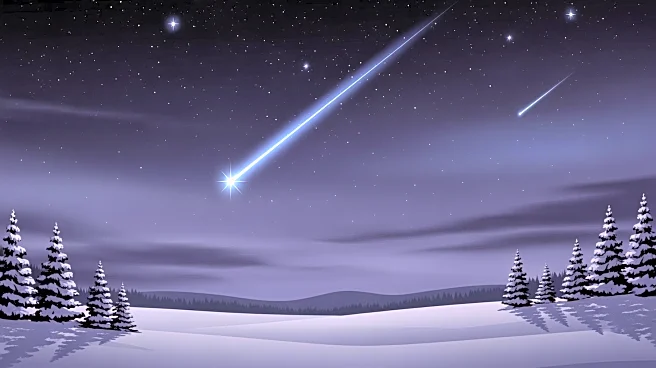
The Ursids meteor shower, an annual celestial event, is set to peak on December 21, 2025, coinciding with the winter solstice. This meteor shower is caused by debris from the comet 8P/Tuttle, which Earth passes through each December. The Ursids are known
for producing around 5 to 10 meteors per hour under optimal dark sky conditions, although they have occasionally surprised observers with more intense outbursts. The best time to view the Ursids is between midnight and 5 a.m. ET, with the meteors appearing about 40 degrees above the bright orange star Kochab. Observers are advised to allow their eyes to adjust to the darkness for about 30 minutes to enhance visibility of the faint meteors.
Why It's Important?
The Ursids meteor shower offers a unique opportunity for sky-watchers and astronomy enthusiasts to witness a natural spectacle that marks the end of the year's meteor showers. This event not only provides a chance for public engagement with astronomy but also highlights the ongoing interest in celestial phenomena. The timing of the Ursids, near the winter solstice, means longer nights, which can enhance viewing opportunities. Such events can inspire educational activities and increase public interest in space science, potentially influencing future generations to pursue careers in STEM fields.
What's Next?
Following the Ursids, the Quadrantids meteor shower will begin to appear from December 28, 2025, and is expected to peak on the night of January 3 and the early morning of January 4, 2026. This upcoming meteor shower is considered the first major meteor event of the new year, offering another opportunity for sky-watchers to observe meteor activity. As these events continue to captivate public interest, they may lead to increased participation in community stargazing events and educational programs focused on astronomy.