
What's Happening?
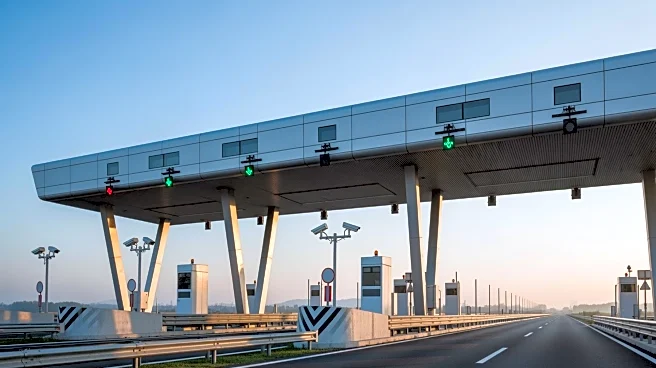
The Atlantic City Expressway is transitioning to an all-electronic tolling system, known as toll-by-plate, starting Sunday. This change will eliminate the need for cash toll plazas, streamlining the toll collection
process. As part of this transition, drivers will experience a 3% increase in toll rates. The new system is designed to improve traffic flow and reduce congestion by allowing vehicles to pass through toll points without stopping. This move is part of a broader trend towards electronic tolling systems across the United States, aimed at enhancing efficiency and reducing operational costs.
Why It's Important?
The shift to a toll-by-plate system on the Atlantic City Expressway is significant for several reasons. Firstly, it reflects a growing trend in transportation infrastructure towards digital solutions that can handle increasing traffic volumes more efficiently. By eliminating cash transactions, the system reduces the need for physical toll booths, which can cause traffic delays and increase emissions from idling vehicles. Additionally, the 3% toll increase may have financial implications for regular commuters and could influence travel patterns. This change also highlights the ongoing investment in infrastructure modernization, which is crucial for supporting economic growth and improving transportation networks.
What's Next?
As the new toll-by-plate system is implemented, drivers will need to adapt to the changes, which may include setting up electronic payment accounts or ensuring their vehicle information is up-to-date for accurate billing. The transition period may involve some initial confusion or technical issues, which authorities will need to address promptly. Additionally, the impact of the toll increase on traffic patterns and commuter behavior will be monitored closely. Stakeholders, including local businesses and residents, may express concerns or support, influencing future transportation policies and infrastructure investments.