






What's Happening?
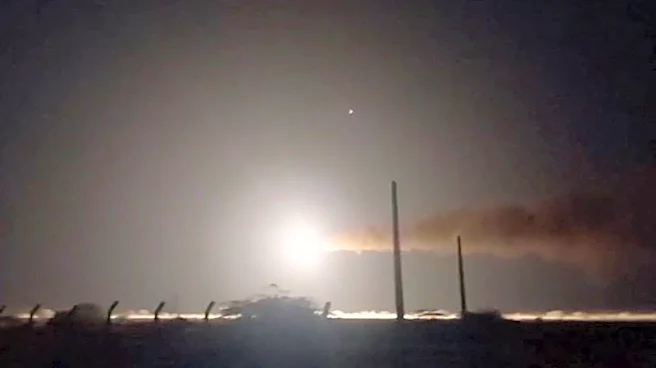
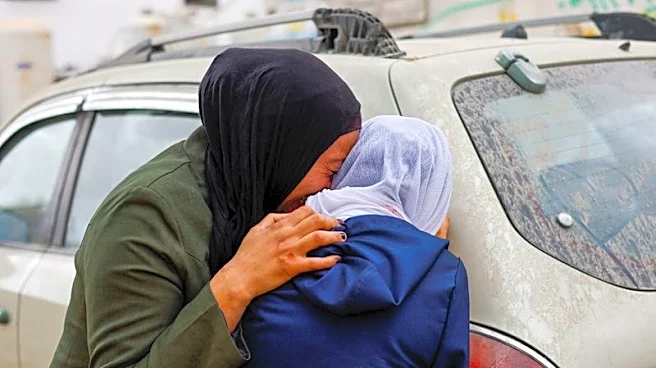
Azzam al-Hayya, the son of Hamas leader Khalil al-Hayya, was killed in an Israeli airstrike in Gaza City. The attack occurred in the Al-Daraj neighborhood, and Azzam succumbed to his injuries after being taken to al-Shifa hospital. This marks the fourth
son of Khalil al-Hayya to be killed by Israeli forces. The incident has sparked mourning and anger among Palestinians, with many viewing it as part of Israel's broader strategy to pressure Hamas into disarmament. The airstrike coincides with ongoing ceasefire talks in Cairo, where Hamas and other Palestinian factions are negotiating with regional mediators and representatives from the U.S. Board of Peace. The talks aim to advance a ceasefire agreement that includes Israeli troop withdrawal and reconstruction efforts in Gaza.
Why It's Important?
The killing of Azzam al-Hayya highlights the ongoing challenges in achieving a sustainable peace agreement between Israel and Hamas. The incident could jeopardize the fragile ceasefire and complicate negotiations, as it underscores the deep-seated mistrust between the parties. The U.S.-mediated talks are critical in addressing the humanitarian crisis in Gaza and ensuring regional stability. However, the demand for Hamas to disarm remains a significant obstacle. The situation also reflects the broader geopolitical tensions in the Middle East, with implications for U.S. foreign policy and its role in mediating the conflict.
What's Next?
The aftermath of the airstrike may lead to increased hostilities and retaliatory actions from Hamas, potentially escalating the conflict. The ongoing negotiations in Cairo are crucial in determining the path forward, with the international community closely monitoring the situation. The success of the talks depends on addressing key issues such as disarmament and compliance with the ceasefire terms. The U.S. and other stakeholders may need to intensify diplomatic efforts to prevent further violence and support the peace process. The situation remains volatile, with potential consequences for regional security and international relations.