
What's Happening?
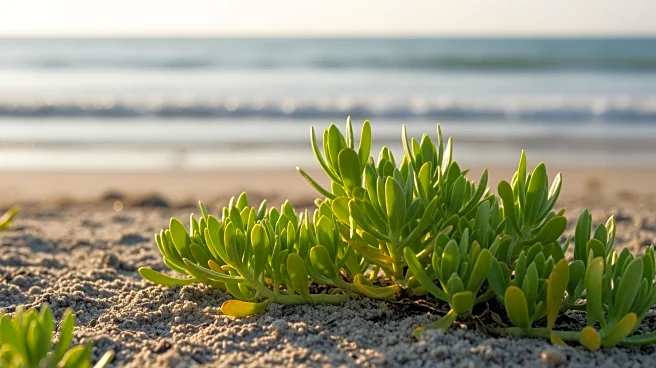
Recent studies highlight the potential of halophytes, salt-tolerant plants, to bolster coastal agriculture as sea levels rise. These plants thrive in saline environments, such as coastlines and salt marshes,
and are increasingly seen as vital to both ecosystems and modern agriculture. In Venice, Italy, farmers are facing challenges due to increased soil salinity caused by thermal ocean expansion and prolonged low rainfall. Researchers have found that integrating halophytes with traditional crops like tomatoes can enhance yields and nutritional value. This approach not only mitigates the impact of fertilizer runoff but also adds economic value without sacrificing land for traditional crops.
Why It's Important?
The use of halophytes in agriculture represents a sustainable solution to the challenges posed by climate change, particularly in coastal regions. As sea levels rise, traditional farming methods become less viable, threatening food security and economic stability. By adopting halophytes, farmers can maintain productivity and protect their livelihoods. This ecological approach also supports biodiversity and reduces environmental impact, aligning with global efforts to combat climate change. The success of such initiatives could serve as a model for other regions facing similar challenges, promoting resilience and sustainability in agriculture.
What's Next?
The integration of halophytes into mainstream agriculture requires overcoming challenges such as consumer acceptance and scaling industrial processing. Efforts are underway to stimulate demand through collaborations with chefs and artists, highlighting the culinary potential of these plants. Continued research and development are needed to optimize cultivation techniques and expand the use of halophytes globally. Policymakers and agricultural stakeholders must support these initiatives to ensure widespread adoption and long-term success.