





What's Happening?
NASA's Small Spacecraft Systems Virtual Institute has published the 2026 State-of-the-Art report on small spacecraft technologies. The report highlights rapid advancements in SmallSat technology, driven by improvements in materials, power systems, avionics,
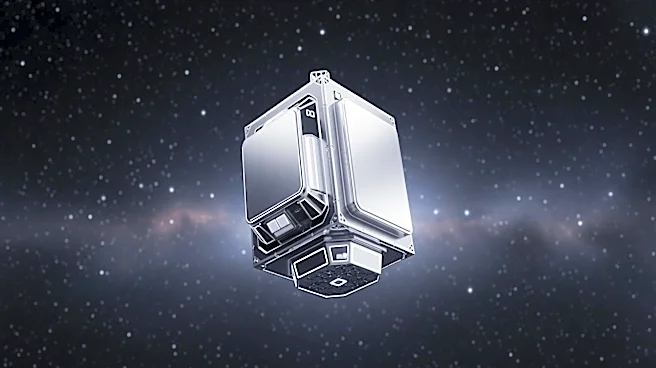
and communications. These developments are enabling a new class of spacecraft that bridge the gap between traditional CubeSats and larger satellites. The report notes a significant transformation in small satellite technologies, moving from experimental platforms to highly capable systems that can operate in demanding environments.
Why It's Important?
The advancements in small spacecraft technologies have significant implications for space exploration and satellite deployment. These technologies allow for more ambitious missions in Earth orbit and beyond, potentially reducing costs and increasing the flexibility of space missions. The shift towards high-performance avionics and energy management systems supports the growing demand for autonomous and mission-flexible spacecraft. This progress could lead to more efficient satellite networks, improved data collection, and enhanced capabilities for scientific research and commercial applications.
What's Next?
The report suggests that the continued development of small spacecraft technologies will focus on further enhancing energy storage, power management, and avionics capabilities. As these technologies evolve, they are expected to support more complex and diverse missions, including those involving machine learning and edge processing. The space industry will likely see increased collaboration between public and private sectors to leverage these advancements for a wide range of applications, from Earth observation to deep space exploration.