




What's Happening?
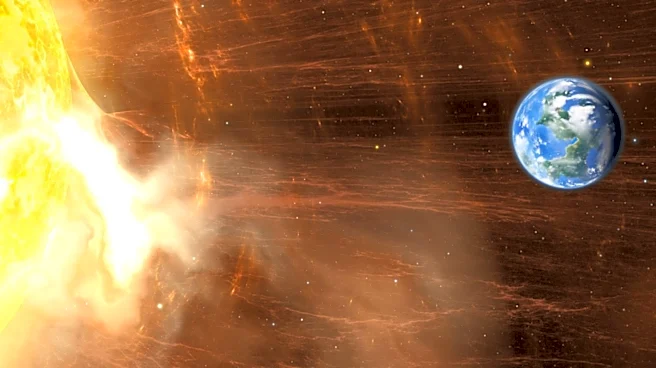
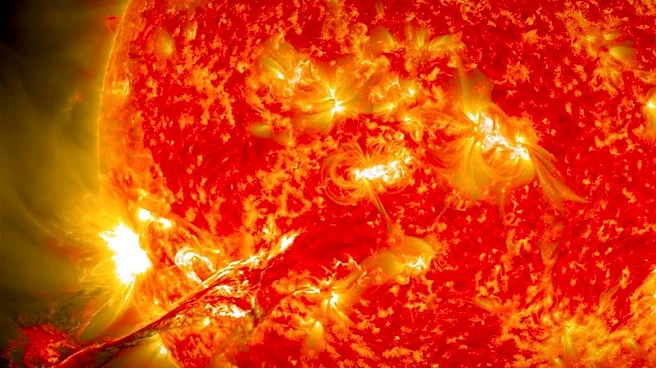
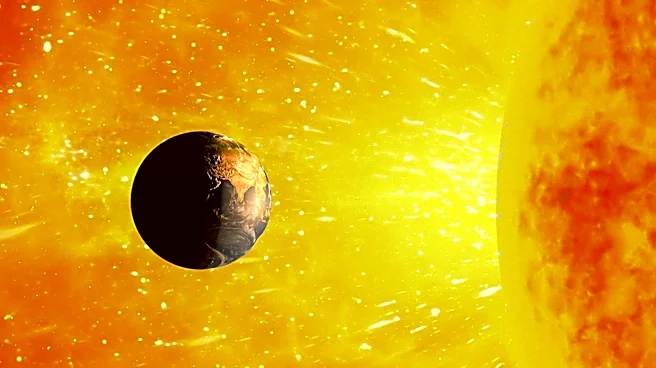
A recent study led by NASA's Goddard Space Flight Center suggests that the effects of solar storms on Earth may not have an upper limit, as previously believed. The research, published in Nature, challenges the long-held assumption that Earth's response
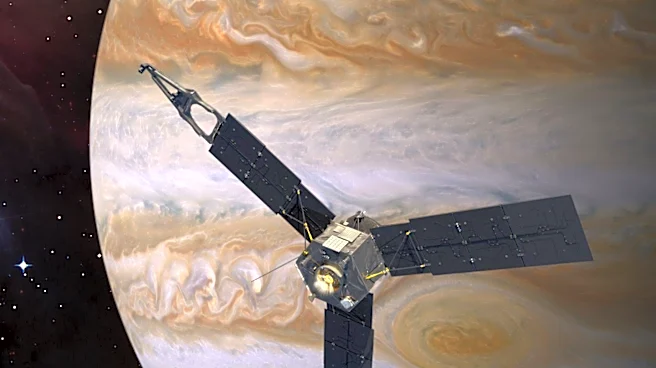
to solar storms reaches a saturation point. The study, led by space physicist Nithin Sivadas, indicates that the perceived limit is due to uncertainties in solar wind measurements. Typically, these measurements are taken by spacecraft positioned closer to the Sun than Earth, leading to a misinterpretation of the solar wind's strength when it reaches Earth. The team analyzed over a million solar wind measurements from NASA spacecraft closer to Earth, such as MMS and THEMIS, which showed a direct correlation between solar wind strength and electric currents in Earth's upper atmosphere, suggesting no upper limit.
Why It's Important?
The findings of this study have significant implications for technology and infrastructure on Earth. Solar storms can intensify electric currents in the upper atmosphere, affecting satellites, communication systems, and navigation signals. If there is indeed no upper limit to these effects, it could mean that technology is more vulnerable to solar storms than previously thought. This could lead to increased risks of disruptions in communication and navigation systems, which are critical for various sectors, including aviation, maritime, and emergency services. Understanding the true extent of solar storm impacts is crucial for developing better protective measures and ensuring the resilience of technological systems against space weather events.
What's Next?
Further observations and analyses of strong solar wind events are necessary to confirm whether Earth's response to solar storms truly lacks an upper limit. This research could lead to a reevaluation of current models and strategies for predicting and mitigating the effects of solar storms. Scientists and policymakers may need to collaborate on enhancing space weather monitoring systems and developing more robust infrastructure to withstand potential increases in solar storm intensity. Additionally, this study may prompt further research into the mechanisms of solar wind interactions with Earth's magnetic field and atmosphere.