








What's Happening?
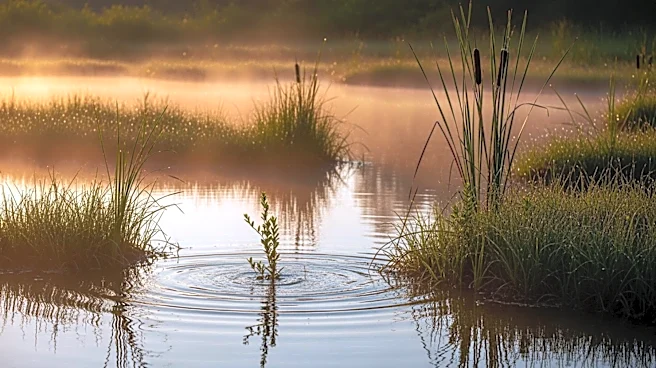
In Plymouth, Massachusetts, a former cranberry farm has been transformed into the Tidmarsh Wildlife Sanctuary, setting a precedent for wetland restoration. The land, once characterized by cranberry bogs, has been restored to its natural state, featuring
streams, wildlife, and diverse plant life. This transformation was achieved through the efforts of Glorianna Davenport and her husband, who sold the land for conservation purposes. The restoration involved planting over 20,000 native species, removing old dams, and creating new waterways. The project has become the largest freshwater restoration initiative in Massachusetts, providing a model for other cranberry farms facing challenges due to climate change. Researchers and conservationists have documented the restoration process, offering valuable insights into wetland recovery.
Why It's Important?
The restoration of Tidmarsh Wildlife Sanctuary is significant as it addresses the challenges posed by climate change to cranberry farming, a traditional industry in New England. Cranberry farms require cold winters and ample water, conditions increasingly threatened by warmer temperatures and droughts. The success of Tidmarsh demonstrates the potential for converting retired cranberry farms into thriving wetlands, which can help mitigate climate change impacts by absorbing floodwaters and storing carbon dioxide. The project has inspired the Massachusetts Cranberry Bog Restoration Program, which aims to assist farmers in transitioning their lands for conservation. This initiative not only preserves biodiversity but also supports local economies by providing new opportunities for ecotourism and education.
What's Next?
The Massachusetts Cranberry Bog Restoration Program plans to expand its efforts, with 11 additional projects in the planning stages, aiming to restore another thousand acres over the next decade. The program connects farmers with federal funding and conservation-minded buyers, encouraging more landowners to consider restoration. As more cranberry farms retire, the program seeks to prevent these lands from being lost to development. The ongoing research at Tidmarsh and other sites continues to provide valuable data, which could influence similar restoration projects globally. The Living Observatory, a nonprofit founded by Davenport, plays a crucial role in documenting and sharing these findings, fostering collaboration among scientists, artists, and conservationists.
Beyond the Headlines
The Tidmarsh restoration project highlights the broader implications of wetland conservation in combating climate change. Wetlands act as natural barriers against extreme weather events, which are becoming more frequent in the Northeast. The project also underscores the importance of community involvement and interdisciplinary collaboration in environmental conservation. By engaging local residents, researchers, and artists, Tidmarsh has become a living laboratory for ecological restoration, offering educational opportunities and fostering a deeper appreciation for natural landscapes. The success of Tidmarsh may inspire similar initiatives in other regions, promoting sustainable land management practices and enhancing resilience against climate change.