



What's Happening?
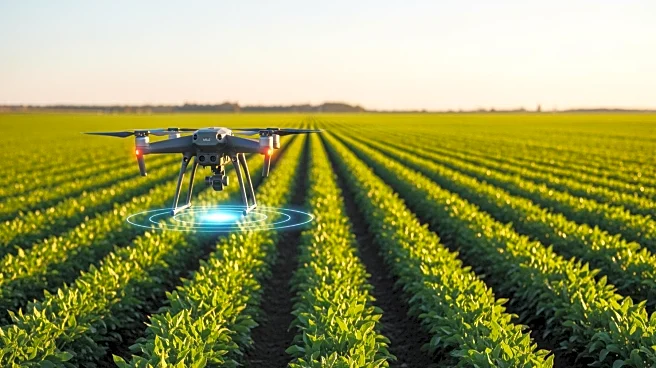
Agricultural producers in Louisiana are increasingly adopting precision agriculture, a strategy that utilizes drones, sensors, and artificial intelligence to enhance crop production. The LSU AgCenter has been at the forefront of this movement, providing
research and education on technologies that help identify plant stress and optimize the use of fertilizers and pesticides. At a recent Precision Agriculture Summit, experts discussed the benefits of these technologies, which include cost savings and reduced environmental impact. The summit highlighted advancements such as drones for targeted spraying and AI models for pest detection, which are becoming more accessible and economically viable for farmers.
Why It's Important?
The adoption of precision agriculture in Louisiana represents a significant shift towards more sustainable and efficient farming practices. By leveraging AI and automation, farmers can address labor shortages and reduce input costs, leading to increased profitability. This approach not only enhances productivity but also minimizes environmental impact by preventing excess nutrient runoff. The economic benefits are substantial, as precision agriculture can lead to better resource management and higher crop yields. This trend is crucial for the agricultural sector, which faces challenges such as climate change and fluctuating market demands.
What's Next?
As precision agriculture technologies continue to evolve, further automation is expected to reduce the need for human labor in data analysis and equipment operation. The LSU AgCenter plans to expand its research and educational efforts to support this transition. Farmers are likely to see increased adoption of AI-driven tools, such as drones and robotic systems, which will further enhance efficiency and sustainability. The ongoing development of machine learning applications for pest management and crop monitoring will also play a critical role in shaping the future of agriculture in the region.