






What's Happening?
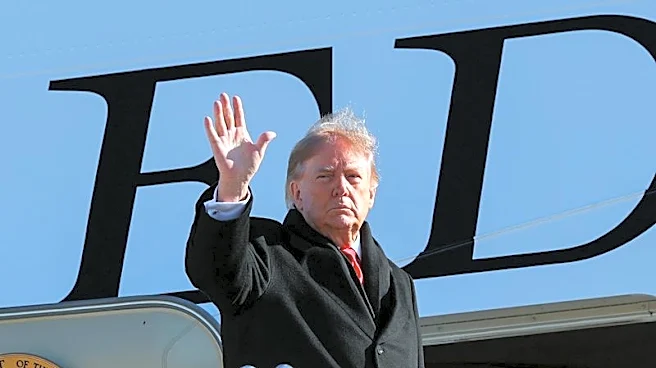
The Council on Foreign Relations (CFR) has published an analysis suggesting that a significant breakthrough in nuclear arms control between President Trump and Chinese President Xi Jinping at the Asia-Pacific Economic Cooperation (APEC) summit is improbable.
While President Trump expressed intentions to discuss 'denuclearization,' and the Chinese Foreign Ministry confirmed discussions on 'safeguarding world peace and promoting strategic stability,' the CFR indicates that trilateral denuclearization talks are unlikely to yield the limits on China’s nuclear arsenal or increased transparency that Washington desires. China's reluctance stems from its belief that secrecy is crucial for its nuclear deterrent, particularly given its no-first-use pledge. Experts like Wu Riqiang of Tsinghua University and Hui Zhang of Harvard’s Belfer Center highlight that 'quantitative ambiguity' regarding China's warheads enhances its deterrent credibility, making intrusive verification measures unappealing to Beijing. Despite these challenges, the CFR emphasizes the importance of continuing efforts to engage Beijing in nuclear arms control to reduce the risk of escalation through misperception.
Why It's Important?
This analysis is important because it highlights the complex dynamics and differing strategic priorities between the United States and China regarding nuclear arms control. The unlikelihood of a breakthrough at APEC underscores the persistent challenges in achieving greater transparency and limitations on China's growing nuclear arsenal. For the U.S., China's expanding capabilities without clear oversight pose potential risks to strategic stability and could complicate future arms control frameworks. China's emphasis on secrecy for its deterrent, while understandable from its strategic perspective, creates a trust deficit that hinders broader disarmament efforts. The CFR's perspective suggests that without a shift in fundamental strategic outlooks, significant progress on traditional arms control measures remains elusive, potentially leading to continued arms buildup and increased global strategic uncertainty. The ongoing dialogue, even without immediate breakthroughs, is crucial for managing potential miscalculations in a volatile geopolitical landscape.
What's Next?
Despite the low probability of a major breakthrough, the CFR suggests that efforts to engage China on nuclear arms control should continue. Future discussions could focus on identifying mutually beneficial pathways that reduce incentives for conflict rather than solely on numerical disparities. Potential areas for exploration include ballistic missile launch notifications or tactical nuclear weapons deployments, which might not touch upon China's core national priorities related to its deterrent secrecy. Establishing regular channels for discussing these topics, even if they do not generate immediate headlines, could help mitigate dangerous misunderstandings and build a foundation for future cooperation. The U.S. will likely continue to press for greater transparency, while China is expected to maintain its stance on the necessity of strategic ambiguity for its defense. The trajectory of these discussions will depend on evolving geopolitical tensions and the willingness of both nations to find common ground on specific, less sensitive aspects of nuclear security.
Beyond the Headlines
The CFR's analysis points to a deeper philosophical divide in nuclear strategy between the U.S. and China. China's 'no-first-use' policy, coupled with its reliance on 'quantitative ambiguity' for deterrence, contrasts with the U.S. approach that often emphasizes transparency and verifiable arms control treaties. This divergence highlights the challenge of applying traditional arms control frameworks to a rising nuclear power with different strategic doctrines. The long-term implication is that future arms control efforts may need to be more flexible and creative, moving beyond conventional numerical limitations to focus on risk reduction and confidence-building measures. The ethical dimension of nuclear secrecy also comes into play, as a lack of transparency can fuel mistrust and increase the risk of miscalculation during crises. This situation could lead to a new era of strategic competition where managing perceptions and intentions becomes as critical as managing arsenals, potentially reshaping global nuclear security paradigms.