







What's Happening?
The Lewiston Tribune continues to be a vital source for death notices and obituaries in the Lewis-Clark Valley, encompassing north-central Idaho and southeastern Washington. For over a century, the newspaper has documented local life, serving as a primary
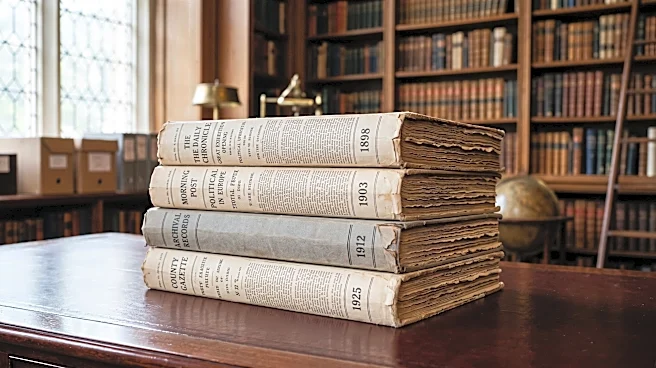
record for families announcing the passing of loved ones. The publication distinguishes between brief death notices, which provide essential legal facts like name, age, date of death, and funeral home, and longer, paid biographical obituaries that detail life stories, achievements, and personal anecdotes. The Tribune's archives, dating back to 1892, are accessible through its official website (which has a digital paywall for recent content), local institutions like the Lewiston City Library and Nez Perce County Historical Society, and regional university collections such as the University of Idaho Library. Families can submit notices directly or through funeral homes, with verification of death required to ensure accuracy.
Why It's Important?
The Lewiston Tribune's role extends beyond mere news dissemination; it acts as a cultural cornerstone and historical record for the geographically isolated Lewis-Clark Valley. Its death notices and obituaries serve as crucial connectors for rural towns, fostering community support during times of grief. The continued reliance on print notices in this region highlights the enduring value of tangible records for older demographics and for preserving family heritage through scrapbooks and physical archives. For genealogists and historians, the Tribune's extensive archives offer invaluable insights into the lives of early pioneers and the development of communities along the Snake and Clearwater rivers. The distinction between death notices and obituaries also provides families with options to manage costs while ensuring their loved ones' passing is appropriately acknowledged within the community.
What's Next?
As digital media continues to evolve, the Lewiston Tribune, like many local newspapers, faces the ongoing challenge of balancing traditional print services with digital accessibility. The newspaper will likely continue to refine its online platforms to cater to a broader audience while maintaining its commitment to print for those who prefer it. Families will continue to weigh the benefits of print's tangible legacy and community outreach against digital notices' global reach and interactive features. The Tribune's ongoing collaboration with local libraries and historical societies will remain crucial for preserving and making historical records accessible for future generations, ensuring the rich, interconnected history of the Lewis-Clark Valley is not lost.
Beyond the Headlines
The enduring significance of the Lewiston Tribune's death notices reflects deeper societal values regarding community, memory, and the preservation of local history. In an increasingly digital world, the newspaper's role as a central repository for life and death announcements underscores the human need for communal acknowledgment of loss and the desire to leave a lasting record. This practice reinforces community bonds, particularly in close-knit regions where multi-generational families reside. The Tribune's archives also serve as a testament to the region's unique cultural identity, offering a window into the social fabric, economic shifts, and personal narratives that have shaped the Lewis-Clark Valley over more than a century. The newspaper's commitment to accuracy and verification in its death notices upholds the integrity of public records, which is essential for both legal and genealogical purposes.