







What's Happening?
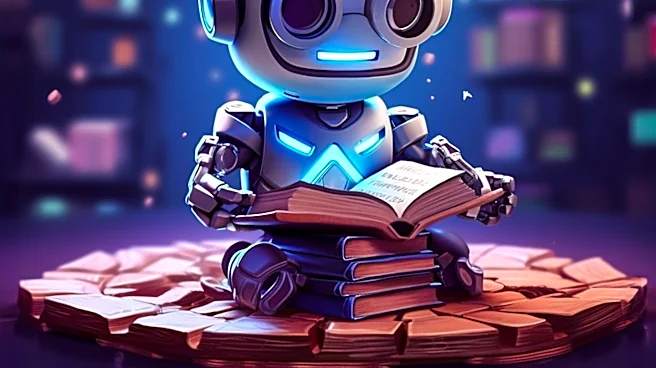
Novatio School, an AI-powered educational institution for students in grades 2 through 8, is reimagining the traditional school day by integrating artificial intelligence into its learning model. The school emphasizes that AI works behind the scenes to support
personalized learning rather than replacing human teachers. Students at Novatio School still engage with live teachers, classmates, discussions, coaching, and clubs, fostering social interaction and relationship building. The core function of AI in this setting is to analyze student performance, identify knowledge gaps, and tailor educational support to individual needs. This data-driven approach provides teachers with more comprehensive information about where each student requires additional assistance, allowing for more targeted and effective instruction. Karissa Ham, Head of School at Novatio School, clarifies that the goal is to enhance the learning experience through technology, not to substitute human educators.
Why It's Important?
The Novatio School model represents a significant shift in U.S. education, offering a potential blueprint for how technology can personalize learning and improve student outcomes. By leveraging AI to identify individual learning needs, the school aims to address the long-standing challenge of catering to diverse student abilities within a single classroom. This approach could lead to more efficient learning, as students receive support precisely where they need it, potentially reducing academic struggles and increasing engagement. For parents and educators, this model offers a glimpse into a future where technology empowers teachers with actionable insights, allowing them to focus more on mentorship and complex problem-solving rather than routine assessment. If successful, Novatio School's methods could influence broader educational policy and curriculum development, promoting a more adaptive and student-centered learning environment across the nation.
What's Next?
As Novatio School continues to implement its AI-powered model, the focus will likely be on refining the algorithms and integration methods to maximize educational effectiveness. The school will need to continuously assess student progress and teacher feedback to ensure the technology genuinely enhances learning without creating new challenges. Future developments might include expanding the range of AI tools used, such as more sophisticated adaptive learning platforms or AI-driven content creation tailored to specific student interests. The success of Novatio School could also inspire other educational institutions to explore similar AI integration, potentially leading to a wider adoption of personalized learning technologies in U.S. schools. This could also spark discussions about the necessary training for teachers to effectively utilize AI tools and the ethical considerations surrounding student data privacy in AI-driven educational systems.
Beyond the Headlines
The Novatio School's approach raises deeper questions about the evolving role of teachers and the nature of human-computer interaction in education. While the school emphasizes that AI does not replace teachers, it fundamentally alters their responsibilities, shifting them towards more analytical and supportive roles. This model could lead to a re-evaluation of teacher training programs, focusing on data interpretation and personalized intervention strategies. Furthermore, the reliance on AI to identify knowledge gaps and personalize learning could influence how students develop self-directed learning skills and critical thinking. There's also an ethical dimension concerning the potential for algorithmic bias in AI systems and the need to ensure equitable access to such advanced educational technologies. The long-term impact on student development, including creativity and social-emotional learning, will be a crucial area for ongoing observation and research as AI becomes more embedded in educational environments.