

What's Happening?
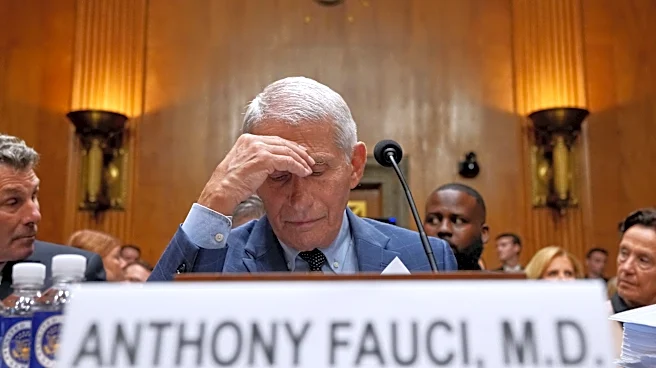
The term 'lockdowns' has been a focal point of debate during the Covid-19 pandemic, with varying interpretations and political implications. Republican lawmakers, including Senator Rand Paul, have criticized Dr. Anthony Fauci for his role in implementing
what they describe as 'lockdowns,' blaming them for unnecessary suffering. The term has been used broadly to describe various virus-curbing measures, though it often obscures the initial lack of knowledge about the virus's spread. Public health experts have noted that the term 'lockdown' was not part of official public health lexicon and was often used by media as a shorthand for severe restrictions. The focus on 'lockdowns' has recast the pandemic experience as one of panic and error, rather than a response to an unchecked virus.
Why It's Important?
The debate over 'lockdowns' reflects deeper political and societal divisions regarding pandemic response strategies. The use of the term has influenced public perception, potentially affecting trust in public health measures and future pandemic preparedness. Mischaracterizing these measures as 'lockdowns' can lead to oversimplified narratives that ignore the complexities of public health decision-making. This has implications for how countries might prepare for future pandemics, as well as for public trust in health authorities. The discussion also highlights the need for clear communication and precise terminology in public health to avoid confusion and misinformation.
Beyond the Headlines
The focus on 'lockdowns' has broader implications for public health policy and communication. It underscores the challenges of conveying complex health measures to the public and the potential for political narratives to shape public understanding. The term's overuse may lead to misconceptions about the effectiveness of public health measures, influencing future policy decisions. This situation highlights the importance of using precise language in public health to ensure accurate public understanding and to build trust in health interventions. The debate also reflects the ongoing tension between individual freedoms and collective health responsibilities during a public health crisis.