









What's Happening?
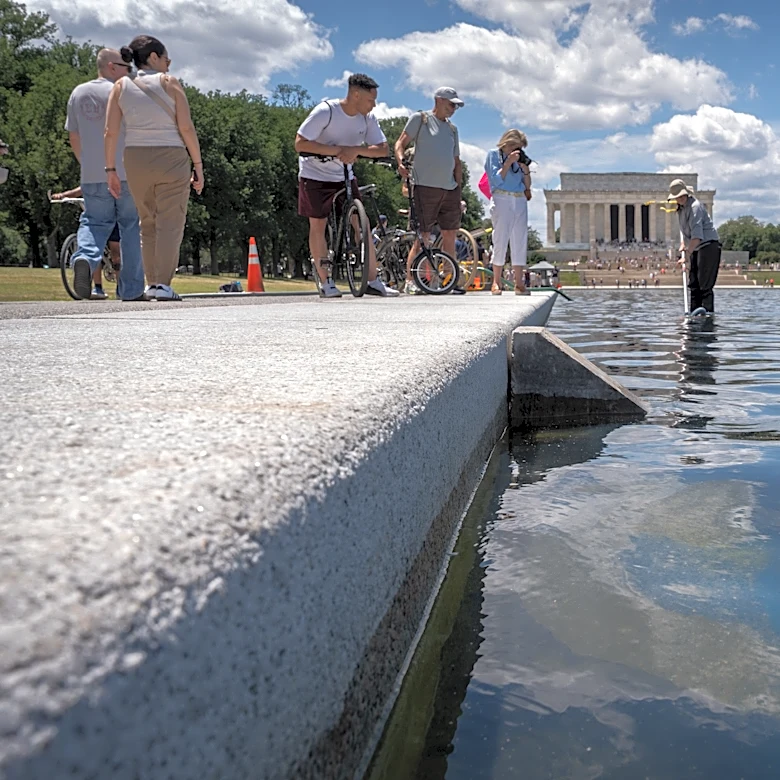
President Trump has spent $14.2 million attempting to renovate the Lincoln Memorial Reflecting Pool in Washington, D.C., aiming to transform it into a resort-like water feature. Despite the investment, the pool remains plagued by algae blooms and leaks,
issues that have persisted since its construction in 1922. Trump's efforts included painting the pool's bottom 'American-flag blue' and employing nanobubbler technology to combat algae. However, the pool's condition has not improved, with peeling paint and algae still present. The renovation was completed through a no-bid contract, raising concerns about the administration's approach to public projects. The situation is seen as a reflection of Trump's hubris, with the administration declaring victory despite visible failures.
Why It's Important?
The renovation of the Reflecting Pool is emblematic of broader issues within the Trump administration, including overconfidence and mismanagement. The use of no-bid contracts raises questions about transparency and accountability in government spending. The failure to effectively address the pool's issues highlights the challenges of maintaining historical landmarks and the importance of careful planning and execution. The public's reaction, including criticism from tourists, underscores the impact of government actions on public perception. This event may influence public opinion and trust in the administration, particularly regarding its handling of public projects and resources.
What's Next?
The ongoing issues with the Reflecting Pool may prompt further scrutiny of the Trump administration's handling of public projects. There could be calls for investigations into the awarding of contracts and the management of the renovation. The administration may face pressure to address the pool's condition and ensure proper maintenance. Additionally, this situation may influence future decisions on government spending and project management, emphasizing the need for transparency and accountability. Stakeholders, including political leaders and civil society groups, may advocate for reforms to prevent similar issues in the future.