





What's Happening?
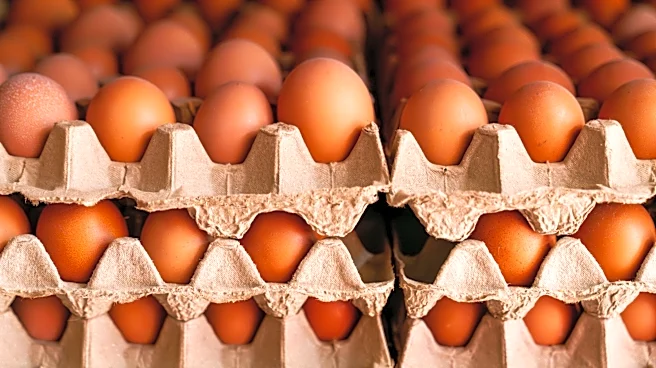
Marler Clark, a food safety law firm, is investigating a Salmonella Enteritidis outbreak linked to shell eggs produced by Midwest Poultry Services, L.P. on two Texas farms. The outbreak has resulted in 98 confirmed illnesses across 17 states, with 73
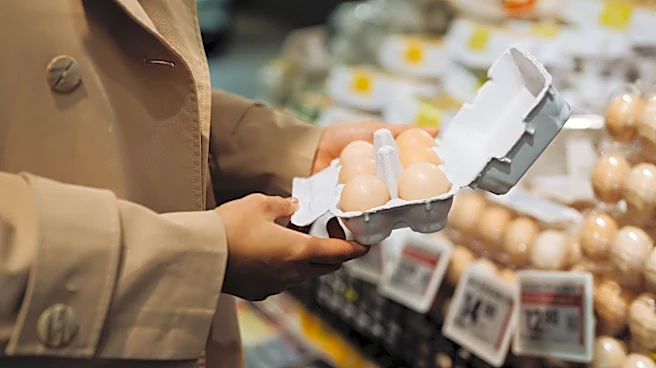
cases occurring in Texas. The illnesses began in November 2025, but the recall of 1,589,577 dozen eggs, approximately 19 million eggs, was only initiated on July 22, 2026. These eggs were distributed to foodservice and retail customers in Texas, Oklahoma, and Louisiana, and sold in Kroger and Brookshire Grocery stores, among others. The FDA has confirmed that laboratory, epidemiologic, and traceback data point to these eggs as the source of the outbreak. The recalled eggs carry specific codes and dates, and consumers are advised to return them for a refund and sanitize any surfaces they contacted.
Why It's Important?
The outbreak highlights significant gaps in food safety oversight and the potential risks to public health. The delay in recalling the contaminated eggs underscores the challenges in timely detection and response to foodborne illnesses. This incident raises concerns about the effectiveness of current inspection intervals and the reliance on producers' self-monitoring. The outbreak has severe implications for vulnerable populations, including infants, the elderly, and those with weakened immune systems, who are at higher risk of severe illness. The situation also emphasizes the need for more stringent regulatory measures and independent verification of safety practices in the food industry to prevent similar occurrences in the future.
What's Next?
As the investigation continues, there may be increased scrutiny on the regulatory framework governing egg production and safety inspections. Potential policy changes could include more frequent inspections and independent verification of safety practices. The outbreak may also prompt discussions on improving traceability and response times in the food supply chain. Stakeholders, including government agencies, industry leaders, and consumer advocacy groups, may push for reforms to enhance food safety standards and protect public health.