






What's Happening?
Alaska's economic development arm, the Alaska Industrial Development and Export Authority (AIDEA), has approved over $200 million in spending since August, just weeks before the new governor, Democrat Jonathan Kreiss-Tomkins, takes office on December
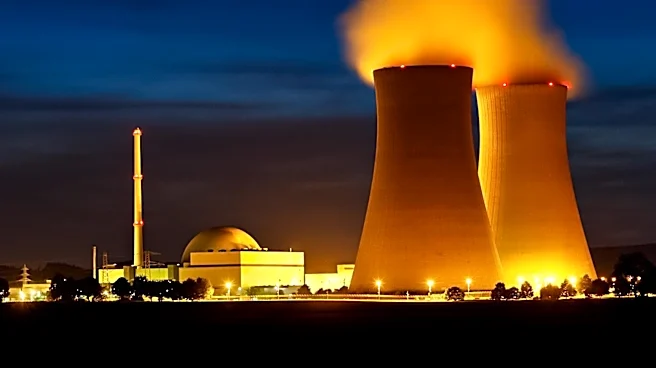
7. These decisions include a $25 million investment in NuCube Energy, an Idaho-based nuclear energy startup, up to $75 million for a new state-owned broadband company, and $10 million for a stake in GeoAlaska, a company studying geothermal energy. Additionally, AIDEA has allocated an estimated $86 million for preliminary work on the controversial Ambler Road project and over $50 million in cash and loans for shipyard projects in Wrangell and Ketchikan. AIDEA officials state these actions are part of their mission to advance economic growth and reflect months of due diligence, not a rushed effort before the change in administration. The corporation is self-funded and operates independently of the state's general operating fund.
Why It's Important?
This spending spree by AIDEA is significant as it commits substantial state resources to various projects just before a change in gubernatorial leadership, potentially locking in policies and investments that the incoming administration might otherwise reconsider. Critics argue that AIDEA's leaders are acting without sufficient oversight, investing in speculative projects while the state government faces financial constraints. Conversely, supporters contend that these investments will stimulate job creation and generate revenue for Alaska's budget, pointing to the annual dividend AIDEA pays to the state. The timing of these decisions raises questions about accountability and the long-term strategic direction of Alaska's economic development, particularly given the incoming governor's stated intention to reassess AIDEA's operations and leadership.
What's Next?
The incoming governor, Jonathan Kreiss-Tomkins, has indicated he plans to "completely reassess" AIDEA and is likely to change its leadership after taking office on December 7. This suggests potential shifts in the agency's investment priorities and operational strategies. AIDEA has at least one more board meeting scheduled for December 4, where further spending decisions could be made. The agency is also moving forward with plans to search for oil in the Arctic National Wildlife Refuge, potentially starting as early as January, provided necessary permits are secured. The new administration's stance on these ongoing projects and future investments will be closely watched, as it could lead to policy reversals or modifications, impacting the trajectory of Alaska's resource development and economic landscape.
Beyond the Headlines
The rapid allocation of funds by AIDEA before a change in gubernatorial power highlights broader issues of transitional governance and the potential for outgoing administrations to influence future policy. This situation raises ethical questions about the extent to which an appointed board should commit significant public funds when a new political leader is poised to take office with potentially different priorities. It also underscores the ongoing tension between economic development initiatives, often focused on resource extraction, and environmental concerns, as exemplified by the controversial Ambler Road project and oil exploration in the Arctic National Wildlife Refuge. The long-term implications could include increased political polarization over economic development strategies and potential legal challenges to decisions made during this transitional period, shaping Alaska's economic and environmental future for years to come.