
What's Happening?
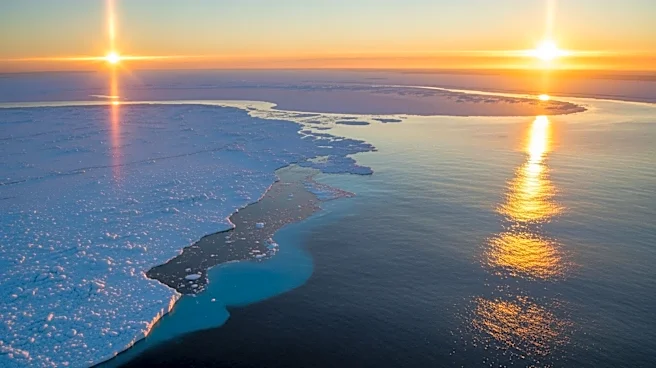
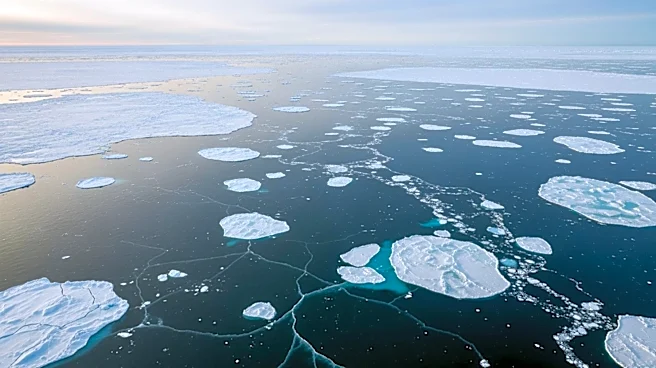
NASA's Terra satellite has captured images of the northern Barents Sea, revealing thin and broken-up sea ice with areas of open water. This observation comes after the Arctic sea ice reached its annual maximum extent on March 15, 2026, matching the lowest
maximum recorded since satellite monitoring began in 1979. The Barents Sea, located at the periphery of the Arctic Ocean, is a critical region for fisheries, shipping routes, and scientific research. The low sea ice extent is attributed to large-scale atmospheric circulation, with winds channeling warm, humid air from the North Atlantic into the area, accelerating the melt. This phenomenon is influenced by tropical weather disturbances originating over the Maritime Continent near Indonesia.
Why It's Important?
The record low sea ice extent in the Barents Sea has significant implications for global climate patterns and local ecosystems. The thinning ice affects marine biodiversity and disrupts traditional fishing practices, impacting local economies. Additionally, the changes in sea ice can alter shipping routes, potentially increasing accessibility but also posing risks due to unpredictable ice conditions. The atmospheric forces driving these changes highlight the interconnectedness of global weather systems, emphasizing the need for comprehensive climate monitoring and adaptive strategies to mitigate the impacts of climate change.
What's Next?
Continued monitoring of the Barents Sea and other Arctic regions is essential to understand the long-term trends in sea ice extent and thickness. Scientists will likely focus on refining climate models to predict future changes and assess the potential impacts on global weather patterns. Policymakers may need to consider adaptive measures for affected industries, such as fisheries and shipping, to address the challenges posed by changing ice conditions. International cooperation in climate research and policy development will be crucial to address the broader implications of Arctic sea ice loss.