



What's Happening?
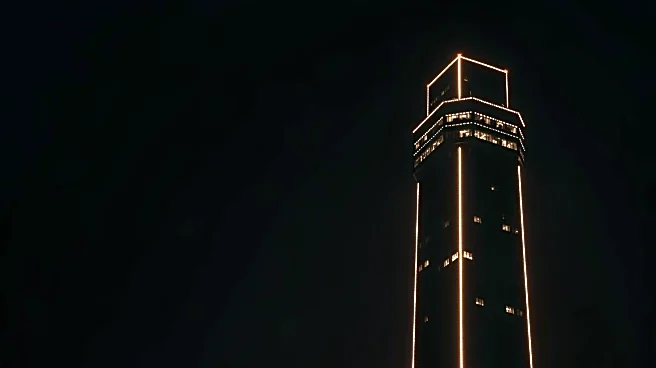
The Grenfell Tower in West London is set to be illuminated nightly as a 'visible reminder' of the tragic fire that occurred on June 14, 2017, resulting in the loss of 72 lives. The Ministry of Housing, Communities and Local Government (MHCLG) announced
that beams of light will be projected from the tower's corners, with 72 green lights to be used on anniversaries of the fire. This initiative aims to ensure the tragedy remains in public consciousness as the tower is dismantled. The lighting will be tested on Saturday and fully operational from Sunday. However, the plan has faced criticism from some groups representing the victims' families, who view it as a 'PR stunt' and argue that it does not address their needs or demands. Despite this, other groups, like Grenfell United, support the initiative, emphasizing the importance of keeping the memory alive as legal proceedings continue.
Why It's Important?
The decision to illuminate Grenfell Tower serves as a poignant reminder of the tragedy and highlights ongoing issues related to public safety, accountability, and memorialization. For the bereaved families and survivors, the lighting represents a commitment to remembering the victims and ensuring that the incident remains a part of public discourse. This move also underscores the broader societal need to address and prevent similar tragedies, particularly in terms of building safety regulations and government accountability. The contrasting reactions from different groups reflect the complex emotions and unresolved issues surrounding the disaster, including the demand for justice and meaningful engagement with affected communities.
What's Next?
As the dismantling of Grenfell Tower progresses, the government has committed to carrying out the work with 'great care and sensitivity' to minimize disruption. Plans for a permanent memorial are also underway, which will require further consultation with the affected families and communities. The lighting initiative may prompt further discussions on how best to honor the victims and address the concerns of those who feel their voices have been ignored. Additionally, the ongoing criminal investigations and potential legal actions could influence public and governmental responses to the tragedy.
Beyond the Headlines
The Grenfell Tower lighting initiative raises broader questions about how societies remember and memorialize tragic events. It highlights the tension between symbolic gestures and substantive actions that address the root causes of such disasters. The criticism from some victim groups points to a deeper need for transparency, accountability, and genuine engagement with affected communities. This situation also reflects the challenges governments face in balancing public memory with ongoing legal and policy considerations, as well as the ethical implications of using public funds for memorialization efforts.