



What's Happening?
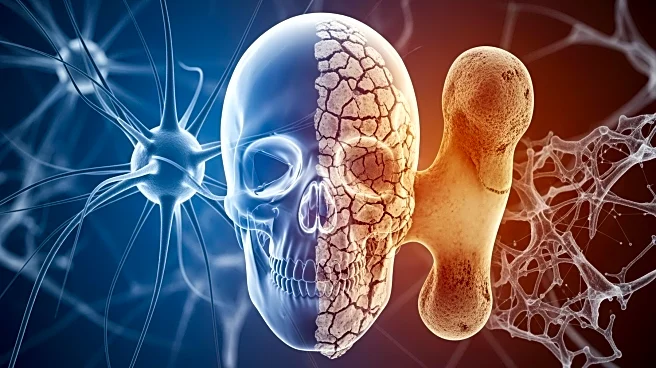
A recent study by neurologists in China has highlighted a potential link between depression and osteoporosis through what is termed the 'bone-brain axis.' This concept suggests that the health of bones and the brain are interconnected, with each potentially
influencing the other. The study, published in Biomolecules, argues that bones are not just structural entities but also hormone-producing organs that can affect distant organs like the brain. For instance, the hormone osteocalcin, released by bones, can cross the blood-brain barrier and impact cognitive function. The study notes that patients with depression often have increased levels of osteocalcin, which decrease when depression is treated. Conversely, those with osteoporosis tend to have higher rates of depression. The researchers propose that understanding this axis could lead to better treatment strategies for both conditions.
Why It's Important?
The findings of this study could have significant implications for the treatment of depression and osteoporosis, particularly among older adults who commonly suffer from both conditions. By recognizing the interconnected nature of these health issues, healthcare providers might develop more comprehensive treatment plans that address both mental and skeletal health. This could lead to the development of new therapies, such as customized exercise programs or drugs targeting bone-derived signals, which could improve patient outcomes. The study emphasizes the need for clinicians to consider the bone-brain axis in their treatment strategies, potentially leading to more effective management of these conditions.
What's Next?
Future research is expected to focus on validating interventions that target the bone-brain axis through clinical trials. The study's authors suggest that incorporating this conceptual framework into patient management strategies could lead to improved outcomes for those suffering from depression and osteoporosis. As the understanding of the bone-brain axis evolves, it may pave the way for innovative treatments that could alleviate symptoms of both conditions. The study calls for further exploration of how exercise and neuromodulation might engage this axis to benefit patients.