







What's Happening?
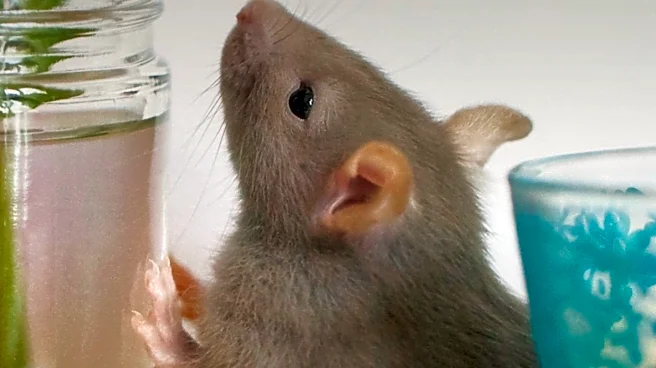
Activists are observing significant advancements in the effort to eliminate animal testing in the United States. The National Institutes of Health (NIH) has pledged over $88 million to transition away from animal models and towards human-based biomedical
research projects. This commitment marks a substantial shift in funding priorities within the scientific community. Concurrently, the anti-vivisection movement has achieved another notable success with the closure of Ridglan Farms in Wisconsin. Previously, Ridglan Farms was recognized as the second-largest breeder of dogs specifically for research purposes in the nation. These developments indicate a growing momentum in the movement to reduce and ultimately end the use of animals in scientific research and product testing across the country.
Why It's Important?
The allocation of over $88 million by the National Institutes of Health signifies a pivotal moment for the future of biomedical research in the U.S. This substantial investment in human-based models could accelerate the development of more accurate and ethically sound research methods, potentially leading to more effective treatments and cures for human diseases. It also reflects a broader societal shift in ethical considerations regarding animal welfare in scientific endeavors. The closure of Ridglan Farms, a major supplier of research animals, will significantly impact the supply chain for animal testing facilities, potentially forcing other institutions to seek alternative research methods. This dual impact—both financial and logistical—underscores a growing national commitment to reducing animal suffering in research and promoting innovative, non-animal alternatives.
What's Next?
The NIH's commitment of $88 million is expected to spur further research and development into human-based biomedical projects. This funding will likely lead to new methodologies and technologies that can replace traditional animal models, potentially setting new standards for scientific research. The closure of Ridglan Farms will necessitate adjustments within the research community, as institutions that previously relied on its supply will need to find alternative sources or, more likely, accelerate their transition to non-animal testing methods. This could encourage other animal breeding facilities for research to re-evaluate their operations. Future legislative efforts and public advocacy campaigns are also likely to build upon these successes, pushing for even more comprehensive policies to end animal testing nationwide.
Beyond the Headlines
These developments extend beyond immediate scientific and ethical considerations, touching upon the evolving relationship between humans and animals in a research context. The shift towards human-based models highlights a growing recognition of the biological differences between species, suggesting that human-specific research may yield more relevant and reliable results for human health. Ethically, the reduction in animal testing reflects a societal progression in animal welfare, challenging long-held practices and promoting a more compassionate approach to scientific discovery. This movement could also influence consumer demand for products not tested on animals, further incentivizing industries to adopt cruelty-free practices and potentially reshaping market dynamics in the long term.