



What's Happening?
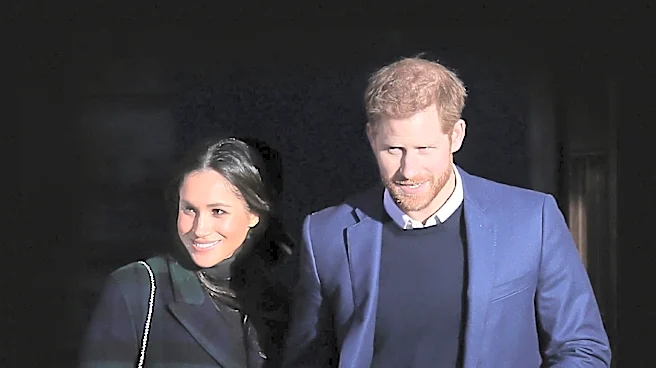
A former head of Scotland Yard’s Royal Protection Command, Dai Davies, has publicly advised Prince Harry and Meghan Markle to stop discussing their security concerns in public. Davies claims that the Duke and Duchess of Sussex are inadvertently compromising
their own safety by allowing details about their movements, their children's schooling, and family life to become public knowledge. This criticism comes as the couple awaits the outcome of government-backed security assessments following their return to Britain. Davies specifically criticized Meghan Markle's decision to share footage from their new life in the U.K., arguing that such clips could provide valuable information to individuals seeking to locate or harm them. He emphasized that legitimate security concerns should be communicated directly to government officials and relevant authorities, rather than through media outlets or favored journalists. The Royal and VIP Executive Committee (RAVEC) is currently reconsidering the couple's protection arrangements, as they lost automatic taxpayer-funded police protection after stepping back as working royals in 2020.
Why It's Important?
This situation highlights the ongoing tension between the desire for privacy and security for public figures, particularly those with royal connections, and the public's interest in their lives. The advice from a former high-ranking security official underscores the potential risks associated with public disclosures of personal details, even seemingly innocuous ones. For Prince Harry and Meghan Markle, who have consistently cited security concerns as a primary reason for their decisions regarding royal duties and residency, this public admonishment could impact their public image and their ongoing efforts to secure adequate protection. The debate also touches upon the broader implications of media engagement for individuals seeking to maintain a degree of personal safety, suggesting that public visibility can be a double-edged sword. The outcome of RAVEC's security review will be crucial in determining the future protection arrangements for the couple and their children, potentially setting a precedent for how security is managed for non-working royals.
What's Next?
Prince Harry and Meghan Markle are currently awaiting the results of separate government-backed security assessments by the Royal and VIP Executive Committee (RAVEC). Meghan Markle is undergoing her first such risk assessment since stepping down from royal duties, while Prince Harry is awaiting a decision from an earlier review. RAVEC has reportedly requested detailed information about the Sussexes' schedules and daily routines, including school runs, to determine the appropriate level of protection. The public nature of this debate, fueled by comments from security experts like Dai Davies, suggests that the couple's approach to their security and public communication will remain under scrutiny. Their response to this public advice, and the eventual decisions made by RAVEC, will shape their future public engagements and their ability to bring their family to Britain safely. The ongoing discussion about their children's schooling and the logistical challenges of their commute further indicate that practical security considerations will continue to be a significant factor in their lives.
Beyond the Headlines
The public discourse surrounding Prince Harry and Meghan Markle's security extends beyond immediate protection concerns, touching upon deeper issues of public expectation, media responsibility, and the evolving role of modern royalty. The criticism from Dai Davies, contrasting with Earl Spencer's defense of the couple's need for protection, illustrates the complex and often conflicting perspectives on their situation. This debate raises questions about the ethical boundaries of media reporting on private lives, especially when security is a factor. It also highlights the challenges faced by individuals who transition from publicly funded roles to more private lives, particularly when their public profile remains high. The suggestion that publicizing vulnerabilities could be a 'twisted stunt' to secure taxpayer-funded protection, as theorized by some commentators, underscores the cynical interpretations that can arise in high-profile situations. Ultimately, this ongoing saga reflects a broader societal conversation about privacy, security, and the responsibilities that come with public visibility in the digital age.