



What's Happening?
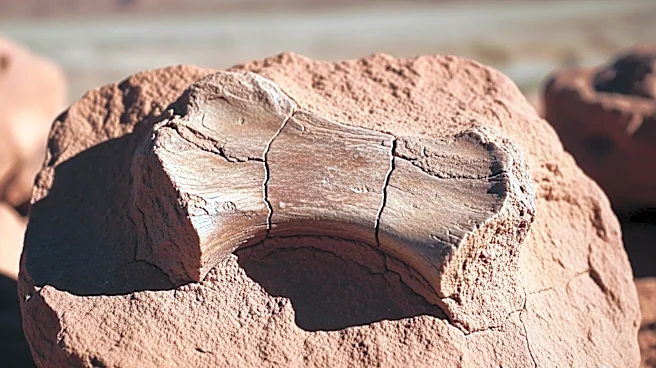
A local shepherd in Patagonia, Dionide Mesa, discovered the fossilized remains of a gigantic dinosaur on his farm. The dinosaur, named Bicharracosaurus dionidei in his honor, is estimated to be around 20 meters long and dates back approximately 155 million
years to the Late Jurassic period. This discovery is significant due to the dinosaur's unique combination of traits from different dinosaur families, which challenges existing classifications. The fossil, now housed at the Museo Paleontológico Egidio Feruglio in Trelew, includes more than 30 vertebrae, ribs, and part of a pelvis. Researchers are particularly interested in the dinosaur's anatomy, which shows similarities to both the Brachiosauridae and Diplodocus families, making it a rare find that could reshape understanding of sauropod evolution.
Why It's Important?
The discovery of Bicharracosaurus dionidei is crucial for paleontologists as it provides new insights into the evolution and distribution of sauropods, particularly in the Southern Hemisphere. Historically, most sauropod fossils have been found in the Northern Hemisphere, with limited evidence from the south. This find from the Chubut Province in Argentina offers comparative material that could lead to a reevaluation of sauropod evolutionary history. The unique mix of traits in Bicharracosaurus dionidei suggests a more complex evolutionary path than previously understood, potentially indicating new migration patterns or evolutionary branches. This discovery not only enriches the fossil record but also highlights Patagonia as an emerging hotspot for paleontological research.
What's Next?
Researchers will continue to study the Bicharracosaurus dionidei fossil to better understand its place in the dinosaur family tree. Further analysis may reveal more about the environmental conditions and ecological niches that allowed such unique traits to develop. The findings could prompt additional expeditions in Patagonia and other parts of the Southern Hemisphere to search for more fossils that could provide further context. As the study progresses, it may lead to revisions in the classification of sauropods and influence how scientists interpret the spread and evolution of these ancient giants across different continents.