






What's Happening?
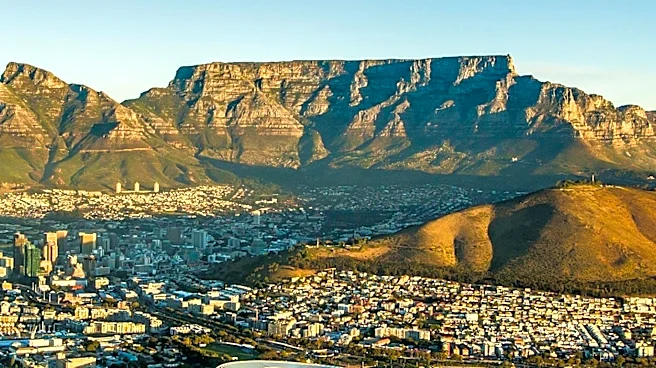
Cape Town, South Africa, has received significant international recognition in the annual Condé Nast Traveller Readers’ Choice Awards. The city was ranked 15th on the list of the best cities in the world and 10th among the friendliest cities globally.
This distinction makes Cape Town the only African city to appear on both lists. The awards are based on nearly 800,000 survey responses from readers in the United Kingdom who rated their travel experiences. Alderman James Vos, the City's Mayoral Committee Member for Economic Growth, highlighted that the city's welcoming residents contribute significantly to its high rankings. He also noted that Cape Town's culinary scene likely played a role in South Africa being ranked the 16th best country overall and 10th best for food worldwide. This recognition comes as Cape Town enters its peak visitor season, aiming to capitalize on its growing reputation.
Why It's Important?
This international accolade is important for Cape Town's tourism sector and broader economic development. High rankings in prestigious travel awards, such as those from Condé Nast Traveller, can significantly boost a city's appeal to international tourists. Increased tourism directly translates to economic benefits through visitor spending on accommodation, dining, activities, and local businesses. Alderman Vos emphasized that tourism is a key pillar of economic growth for Cape Town and South Africa, citing R24.5 billion in direct tourism spending and over 106,000 jobs sustained in 2025. The city aims to increase these figures to R35 billion in tourism spending and 234,041 tourism jobs by 2030. The recognition as a friendly and top-tier destination enhances Cape Town's brand, attracting more visitors and potentially foreign investment, thereby supporting job creation and local entrepreneurship.
What's Next?
Following this recognition, Cape Town plans to intensify its efforts to further boost its tourism industry. Alderman Vos indicated that the city will double down on its place marketing campaigns and strengthen airline partnerships to attract more direct international visitors. The goal is to convert this increased demand into more bookings, longer stays, and greater visitor spending. The city will also continue to work with its tourism partners to achieve its ambitious targets of R35 billion in tourism spend and 234,041 tourism jobs by 2030. As Cape Town enters its peak visitor period, the focus will be on leveraging these awards to maximize the economic impact and solidify its position as a premier global travel destination.
Beyond the Headlines
The recognition of Cape Town as one of the world's friendliest and best cities extends beyond immediate economic gains, touching upon cultural and social dimensions. The emphasis on the 'Capetonians who are so welcoming to visitors' highlights the importance of local hospitality and community in shaping a city's global image. This suggests that sustainable tourism growth is not solely dependent on natural beauty or infrastructure but also on the human element and cultural exchange. Furthermore, the acknowledgment of South Africa's food scene, partly attributed to Cape Town, underscores the role of culinary diversity and local entrepreneurship in defining a destination's unique identity. This could encourage further investment in local food industries and cultural experiences, fostering a more authentic and enriching visitor experience while empowering local communities.