



What's Happening?
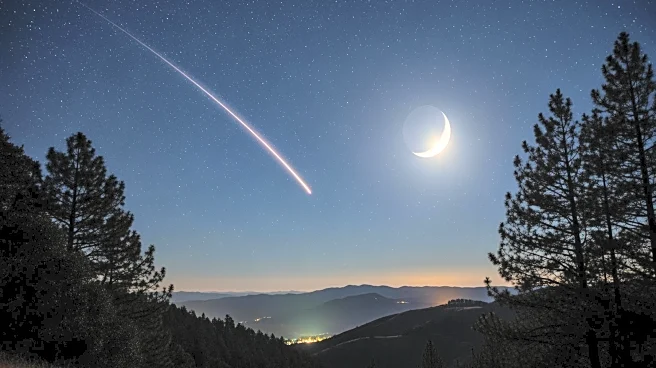
In 2026, California will witness a series of remarkable celestial events, including a total lunar eclipse, two supermoons, and eleven meteor showers. The total lunar eclipse, occurring on March 3, will turn the moon a rusty red as it passes through Earth's
shadow. The supermoons, set for November 24 and December 23, will appear larger and brighter due to the moon's proximity to Earth. Major meteor showers, such as the Perseids in August and the Geminids in December, promise to light up the night sky, offering spectacular views for stargazers.
Why It's Important?
These celestial events provide unique opportunities for scientific observation and public engagement with astronomy. They can inspire interest in space science and offer educational moments for schools and communities. Additionally, such events can boost local tourism, as enthusiasts travel to areas with optimal viewing conditions. The visibility of these phenomena in California highlights the state's potential as a prime location for astronomical observation, contributing to its cultural and scientific appeal.
What's Next?
As these events approach, local organizations and astronomy clubs may organize viewing parties and educational sessions to enhance public participation. The media and educational institutions are likely to increase coverage and provide resources to help the public understand and appreciate these celestial occurrences. This could lead to a heightened interest in astronomy and related sciences, potentially influencing educational and career choices among young people.