





What's Happening?
Fairfax County, Virginia, is leveraging Geographic Information System (GIS) technology to address the affordable housing crisis by enhancing community engagement and transparency. The county has developed a comprehensive data visualization ecosystem that
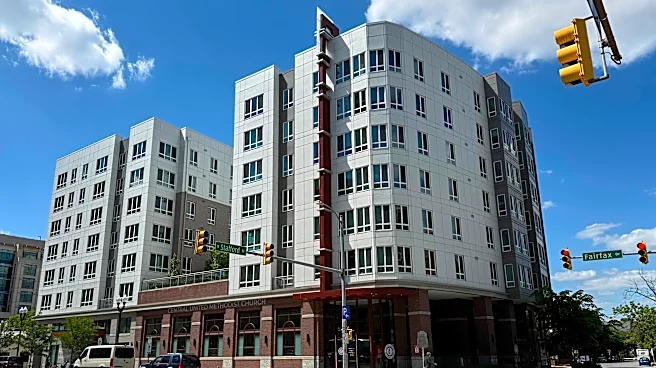
includes a Power BI dashboard to track affordable housing units, area median income levels, and development pipelines. This initiative aims to create 10,000 affordable housing units by 2034, doubling the initial goal of 5,000 units. The GIS tools allow residents and planners to access detailed spatial data, fostering community support and accountability in housing development. The county's approach integrates housing decisions with broader community services, using data layers to visualize the impact of housing on daily life.
Why It's Important?
The use of GIS technology in Fairfax County represents a significant advancement in urban planning and community engagement. By making housing data accessible and transparent, the county is addressing common objections to affordable housing projects, often referred to as 'Not In My Backyard' (NIMBY) responses. This approach not only facilitates informed decision-making but also encourages community buy-in, which is crucial for the successful implementation of housing projects. The initiative could serve as a model for other regions facing similar housing challenges, demonstrating how technology can bridge gaps between policymakers, developers, and residents.
What's Next?
Fairfax County plans to continue expanding its GIS capabilities, with future developments including transit ridership data and heat maps for day-care availability. These enhancements aim to further integrate housing with essential community services, ensuring that new developments meet the needs of residents. The county's commitment to no net loss of existing affordable units suggests ongoing efforts to preserve and expand housing options. As the project progresses, it will be important to monitor its impact on housing availability and community dynamics, potentially influencing housing policies at a broader level.