
What's Happening?
The Antarctic Peninsula, one of the fastest warming regions on Earth, is experiencing significant ecological changes due to climate change. The Southern Ocean, which surrounds the peninsula, plays a crucial
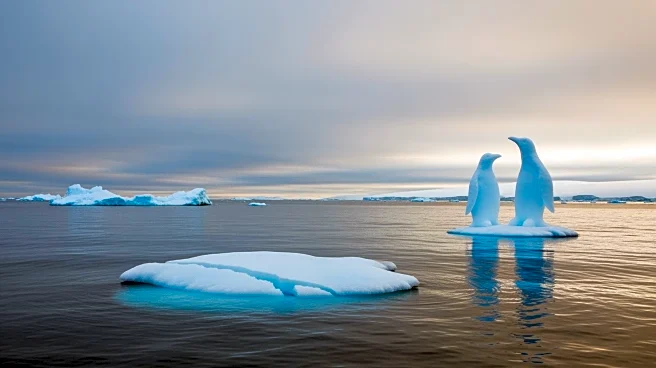
role in absorbing carbon dioxide, a greenhouse gas contributing to global warming. This region is home to diverse wildlife, including Gentoo and Adelie penguins, which are adapting differently to the changing environment. Gentoo penguins are expanding their range southward, thriving in the warming conditions, while Adelie penguins face potential habitat loss due to melting ice. The National Aeronautics and Space Administration reports that from 2002 to 2020, approximately 149 billion metric tons of Antarctic ice melted annually. Tourists visiting the area witness these changes firsthand, observing the majestic yet vulnerable wildlife and landscapes.
Why It's Important?
The changes in the Antarctic Peninsula highlight the broader impacts of climate change on global ecosystems. The region's ability to absorb carbon dioxide is crucial in mitigating climate change effects, but the warming temperatures threaten this balance. The differing responses of Gentoo and Adelie penguins serve as indicators of the broader ecological shifts occurring due to climate change. The potential decline of Adelie penguins could disrupt the Antarctic food web, affecting other species reliant on similar habitats. These changes also have implications for global sea levels, as melting ice contributes to rising oceans, posing risks to coastal communities worldwide.
What's Next?
Continued monitoring and research are essential to understand the full impact of climate change on the Antarctic ecosystem. Conservation efforts may focus on protecting vulnerable species like the Adelie penguins and preserving critical habitats. International cooperation will be vital in addressing the root causes of climate change, such as reducing greenhouse gas emissions. The scientific community may also explore adaptive strategies for wildlife and ecosystems to cope with the changing environment. Public awareness and education about the Antarctic's role in the global climate system could drive policy changes and support for environmental initiatives.
Beyond the Headlines
The situation in Antarctica underscores the ethical responsibility of global communities to address climate change. The region's changes serve as a stark reminder of the interconnectedness of global ecosystems and the potential long-term consequences of inaction. The plight of the Adelie penguins and other species raises questions about biodiversity conservation and the moral obligation to protect vulnerable species. The Antarctic's transformation could also influence cultural perceptions of nature and humanity's role in preserving the planet for future generations.