






What's Happening?
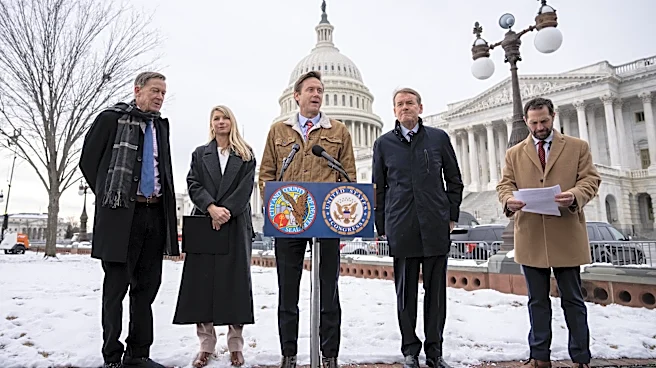
U.S. Senator John Hickenlooper has issued a statement calling for more accountability and a review of the Department of the Interior's (DOI) full suppression strategy for wildfires, following a federal investigation report into the Knowles fire that resulted
in the deaths of four firefighters. The report detailed a chaotic situation marked by inadequate communication, insufficient staffing, and 'task saturation' among fire managers. Senator Hickenlooper emphasized that 'faster, hotter wildfires are our new normal' and stressed the need to adequately staff wildfire response teams. The report itself did not directly address the Senator's concerns about the DOI's full suppression policy, which directs the U.S. Wildland Fire Agency to suppress fires rather than allowing some to burn as in the past.
Why It's Important?
Senator Hickenlooper's call for a policy review and increased accountability highlights critical issues in U.S. wildfire management, particularly as climate change contributes to more frequent and intense fires. The tragic loss of firefighters in the Knowles fire underscores the human cost of these challenges and the urgent need for effective strategies. Questioning the 'full suppression' policy is significant because it challenges a long-standing approach, suggesting a potential shift towards more nuanced fire management that might include controlled burns or allowing some fires to play a natural ecological role. This debate has profound implications for public safety, environmental conservation, and the allocation of resources for federal agencies responsible for wildfire response. The outcome could lead to significant changes in how the U.S. manages its wildlands and protects its communities from fire.
What's Next?
Senator Hickenlooper's statement indicates a push for further examination beyond the initial federal investigation report. This could lead to congressional hearings, legislative proposals, or direct engagement with the Department of the Interior to re-evaluate current wildfire suppression policies and staffing levels. The report's findings, detailing communication breakdowns and staffing shortages, provide a basis for advocating for improved training, technology, and interagency coordination. The families of the deceased firefighters are also seeking answers and accountability, which could fuel public pressure for systemic changes. Future actions will likely focus on ensuring that wildfire response teams are adequately equipped and that policies are adapted to the realities of increasingly severe wildfire seasons.
Beyond the Headlines
The discussion around wildfire suppression policies extends beyond immediate response to broader ecological and climate considerations. The report's mention of 'ecological mandates' and the protection of habitats like the Gunnison sage-grouse, alongside the risk of cheatgrass invasion, illustrates the complex interplay between human intervention, natural processes, and biodiversity. The 'full suppression' strategy, while aimed at protecting lives and property, can sometimes disrupt natural fire regimes, leading to an accumulation of fuel that exacerbates future fires. A re-evaluation could involve a paradigm shift towards integrated fire management that considers the long-term health of ecosystems, potentially incorporating more prescribed burns and managed wildfires where appropriate. This would represent a significant evolution in land management practices, balancing immediate safety concerns with ecological resilience in a changing climate.