







What's Happening?
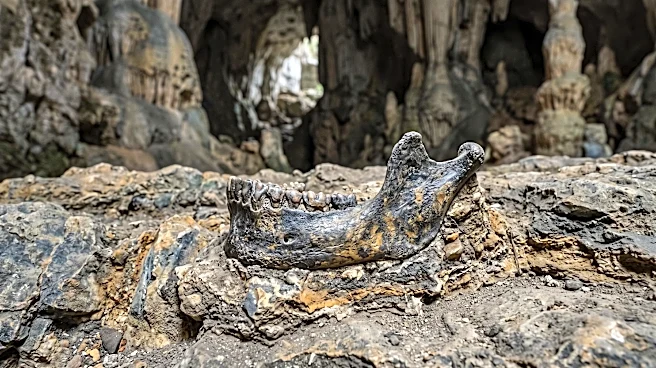
Archaeologists have excavated a 180-foot-long stone tomb in the Western Sahara, revealing a burial site over 4,000 years old. The monument, located near Wadi Lawash el Telli, contained the remains of a young adult, estimated to be between 25 and 35 years old at the time
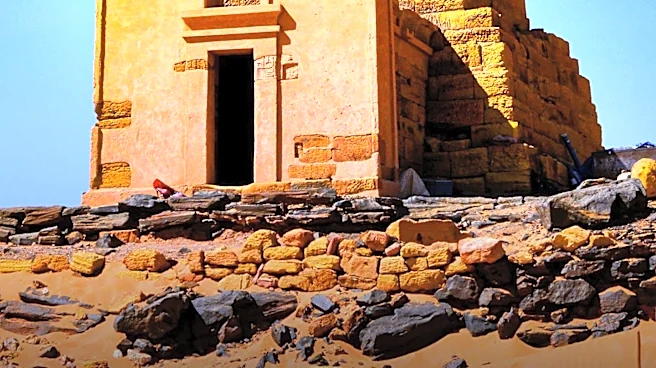
of death. The individual was buried directly on the ground, with the head facing south and legs bent west, accompanied by four ring-shaped beads made from ostrich eggshell. The tomb itself is constructed from local limestone slabs, forming an oval mound with two long stone 'antennae' extending eastward. A study published on October 20, 2026, in African Archaeological Review, provided the first direct dating of an antennae tomb in the Atlantic Sahara, placing the burial between 2467 and 2150 BC. The research team noted that the antennae point towards 102 degrees from geographic north, slightly south of due east.
Why It's Important?
This discovery offers rare insights into prehistoric burial traditions in North Africa, specifically within the Sahara region. The direct dating of an antennae tomb provides crucial chronological data for understanding the evolution of funerary practices during the late Neolithic period. The presence of ostrich eggshell beads suggests cultural connections or trade networks across prehistoric North Africa, as similar beads were widely used. The monument's construction, using readily available local materials and requiring a relatively small labor force, sheds light on the organizational capabilities of ancient communities in the region. Furthermore, the unique 'antennae' feature, whose purpose remains unknown, highlights the complexity and potential symbolic significance of these ancient structures, prompting further research into their cultural and astronomical implications.
What's Next?
Future research will likely focus on understanding the purpose of the distinctive 'antennae' structures and their potential alignment with celestial bodies or other geographical features. Archaeologists may also seek to excavate similar undated stone monuments across the Sahara to establish a broader chronological and cultural context for these burial practices. Further analysis of the human remains, if possible, could provide more details about the individual's diet, health, and genetic origins, offering a more complete picture of the ancient populations inhabiting the region. The proximity to the Sluguilla Lawash rock art site suggests potential connections between burial customs and broader artistic or spiritual expressions, which could be explored in future studies.
Beyond the Headlines
The discovery of this ancient tomb underscores the dynamic environmental history of the Sahara, which was once a much greener landscape capable of sustaining diverse animal life, as evidenced by nearby rock art depicting cattle, ostriches, rhinoceroses, elephants, and giraffes. This shift from simple underground graves to larger stone monuments reflects evolving societal structures and beliefs about death and the afterlife. The meticulous construction of the tomb, even with simple materials, suggests a significant investment of communal effort and a complex understanding of ritual. The enduring mystery of the antennae's purpose invites speculation about ancient astronomical knowledge, territorial markers, or symbolic pathways, hinting at a rich, unwritten history of human interaction with the vast desert landscape.