



What's Happening?
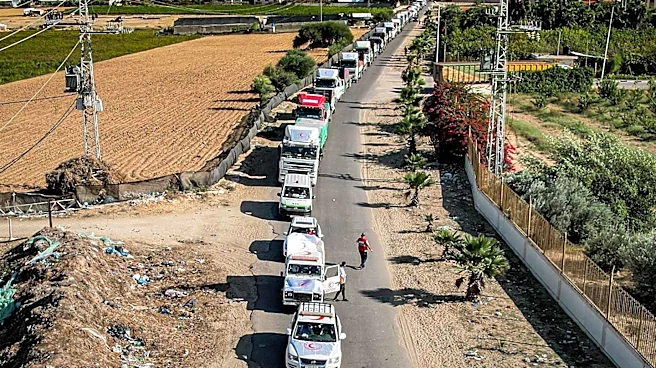
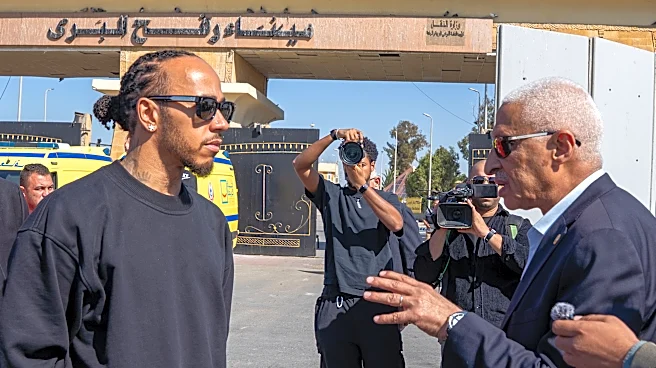
On November 10, 2026, seven-time Formula 1 world champion Lewis Hamilton visited the Rafah border crossing between Egypt and the Gaza Strip. His visit aimed to observe firsthand the humanitarian aid efforts for Palestinians affected by the conflict. Hamilton toured
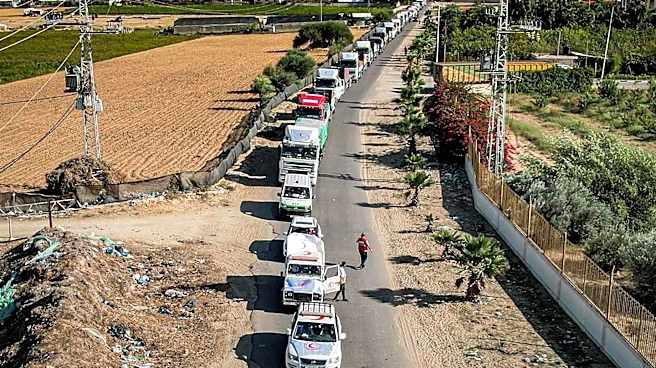
the Rafah border crossing and logistics warehouses operated by the Egyptian Red Crescent, which plays a crucial role in facilitating aid entry into Gaza. During his visit, he greeted aid workers with 'Al-Salamo Alaykom' and engaged in brief conversations with workers and officials. The governor of North Sinai, Khaled Megawer, stated that the visit was intended to inform Hamilton about Egypt's efforts in sending aid to Gaza. This visit follows Hamilton's consistent public advocacy for humanitarian crises and peace in conflict zones, including calls for a ceasefire in Gaza and highlighting the plight of children affected by airstrikes.
Why It's Important?
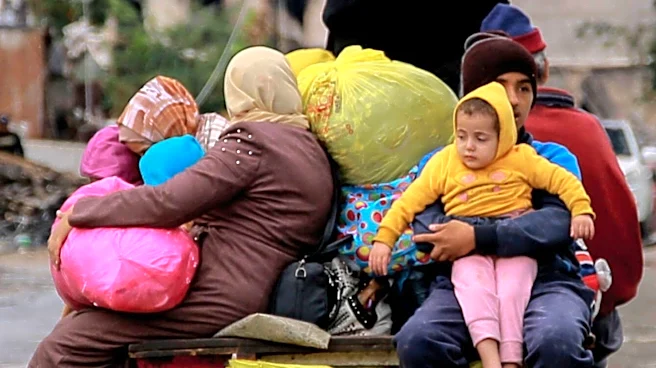
Lewis Hamilton's visit to the Rafah border crossing is significant as it draws international attention to the ongoing humanitarian crisis in Gaza. As a globally recognized public figure, his presence can amplify awareness regarding the challenges of delivering aid and the severe conditions faced by Palestinians. This increased visibility could potentially pressure international bodies and governments to enhance their efforts in ensuring adequate humanitarian assistance reaches Gaza. The source notes that aid entering Gaza continues to fall significantly short of the agreed-upon minimum of 600 trucks per day, despite a ceasefire agreement. Hamilton's advocacy, coupled with his visit, underscores the urgent need for more effective and consistent aid delivery, potentially influencing public opinion and policy discussions surrounding the conflict and humanitarian relief.
What's Next?
The immediate impact of Hamilton's visit may include heightened media coverage and increased public discourse surrounding the humanitarian situation in Gaza. While a ceasefire agreement is in place, the ongoing Israeli military advancements and airstrikes, as reported by an independent commission of U.N. experts, indicate a persistent need for humanitarian intervention. The continued shortfall in aid trucks suggests that the current mechanisms for aid delivery are insufficient. Hamilton's public statements and actions could inspire further engagement from other public figures or organizations, potentially leading to new initiatives or increased funding for aid efforts. However, the long-term effectiveness of such visits in fundamentally altering the geopolitical dynamics or significantly increasing aid flow remains to be seen, as the issue is deeply entrenched in complex political and military factors.
Beyond the Headlines
Hamilton's engagement with the Gaza aid efforts extends beyond a simple celebrity visit; it highlights the growing trend of public figures using their platforms to address complex global humanitarian issues. This can be seen as a form of 'soft diplomacy,' where non-state actors influence international affairs through moral suasion and public awareness. His visit also implicitly critiques the international community's response to the crisis, particularly the failure to meet agreed-upon aid targets. The ethical dimension of his involvement underscores the responsibility of influential individuals to speak out against human suffering, potentially inspiring a broader sense of global citizenship. Furthermore, his actions could encourage a re-evaluation of the role of sports and entertainment figures in advocating for human rights and peace, moving beyond their professional domains to engage with critical social and political challenges.