







What's Happening?
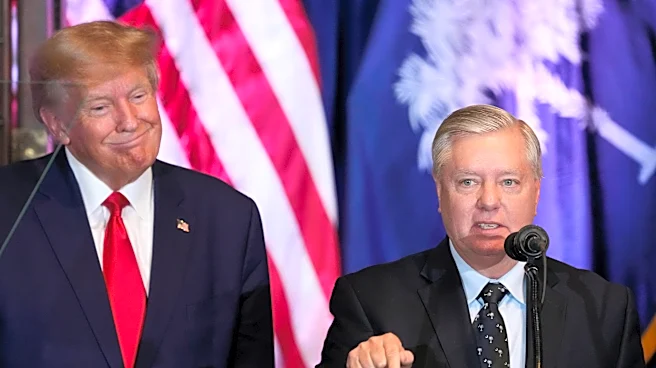
Following the sudden death of Senator Lindsey Graham, South Carolina Republican U.S. Representative William Timmons has addressed speculation about his potential candidacy for the vacant Senate seat. Timmons announced he would not seek the position, emphasizing
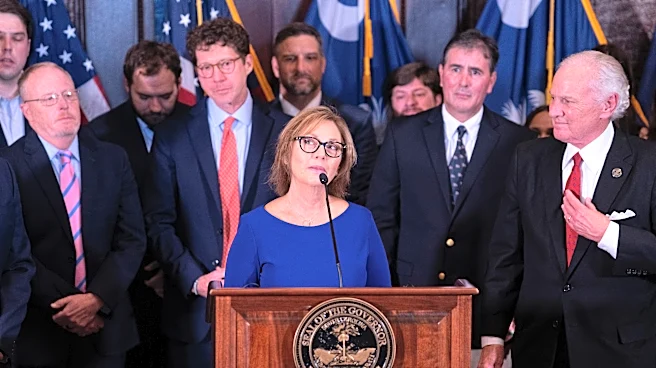
the importance of maintaining a Republican majority in the House. He also criticized fellow Republicans Nancy Mace and Ralph Norman, stating he could not support them as Graham's successor. The seat is temporarily filled by Graham's sister, Darline Graham, appointed by Governor Henry McMaster. A special Republican primary will determine the party's nominee for the November general election.
Why It's Important?
The decision not to run by Timmons highlights internal divisions within the South Carolina Republican Party. His criticism of Mace and Norman reflects broader tensions between establishment Republicans and more populist factions. The outcome of this race could influence the GOP's direction in the state and nationally. With Republicans holding a narrow majority in Congress, the selection of Graham's successor is crucial for maintaining party control. The race is expected to be closely watched, given South Carolina's conservative leanings and the potential impact on the Senate's balance of power.
What's Next?
The special election process will unfold rapidly, with candidate filing opening soon and a primary scheduled for August. Prominent Republicans, including Lieutenant Governor Pamela Evette, are expected to enter the race. The compressed timeline favors candidates with existing name recognition and campaign infrastructure. The winner of the Republican primary will likely have a significant advantage in the general election, given the state's political landscape. The race will test the GOP's ability to unify its factions and could set the tone for future elections.