







What's Happening?
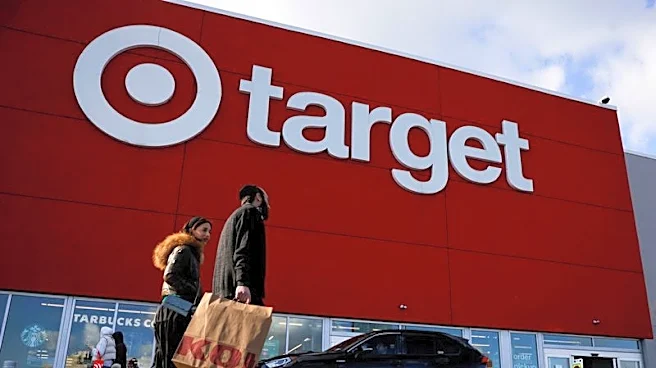
The American Federation of Teachers (AFT) has initiated a nationwide back-to-school boycott against retail giant Target. AFT President Randi Weingarten announced the campaign, urging members to avoid Target and instead patronize 'more ethical shopping
alternatives.' The boycott stems from Target's alleged silence regarding federal immigration enforcement actions by Immigration and Customs Enforcement (ICE), particularly in Minnesota where Target is headquartered. Weingarten stated that Target was given ample time to address the concerns of communities affected by ICE operations, which she characterized as 'federal immigration abuses' and 'terrorizing families' under President Trump's administration. The AFT sent letters to Target CEO Michael Fiddelke in February and March, but reportedly received no response. The Department of Homeland Security (DHS) has rejected the AFT's characterization of ICE, stating that ICE enforces federal immigration laws and does not target schools, calling the AFT's statement a 'false narrative.'
Why It's Important?
This boycott highlights the increasing trend of social and political activism impacting corporate entities and consumer choices in the U.S. The AFT, representing 1.8 million members, wields significant influence, and a successful boycott could lead to tangible financial repercussions for Target, especially during the crucial back-to-school shopping season. The action also underscores the deep divisions within the U.S. regarding immigration policy and the role of corporations in social issues. For Target, navigating this situation involves balancing its public image and stakeholder relations with its business operations. The boycott could set a precedent for other organizations to pressure companies on various social and political stances, potentially leading to a more politicized consumer landscape. Furthermore, the DHS's strong rebuttal indicates the federal government's firm stance on ICE operations and its rejection of what it perceives as attempts to 'demonize' law enforcement.
What's Next?
The AFT plans to continue its 'Shop Smart, Not Target' campaign, directing families to alternative shopping options. The organization's website maps local back-to-school shopping alternatives. The impact of the boycott on Target's sales and public perception will likely be closely monitored by both the AFT and other advocacy groups. There may be increased pressure on Target to issue a statement or take action regarding the AFT's concerns, or to publicly defend its neutral stance. Conversely, the boycott could face counter-criticism, as seen from education advocates and a Heritage Foundation research fellow, Corey DeAngelis, who called for a federal investigation into the AFT's use of pension funds to pressure Target, citing fiduciary concerns. The situation could escalate into a broader debate about the appropriate scope of union activism and corporate social responsibility.
Beyond the Headlines
This event delves into the complex interplay between corporate neutrality, social activism, and political polarization in the U.S. The AFT's decision to target Target for its 'silence' rather than direct action highlights a growing expectation for corporations to take explicit stances on contentious social issues. This puts companies in a difficult position, as taking a stance can alienate one segment of their customer base or investor community while remaining neutral can be perceived as complicity by another. The accusation of using pension funds for political objectives also raises ethical and legal questions about the governance of large organizations and their financial assets. This incident reflects a broader societal shift where economic power is increasingly being leveraged to influence political and social outcomes, moving beyond traditional lobbying to direct consumer and investor pressure.