




What's Happening?
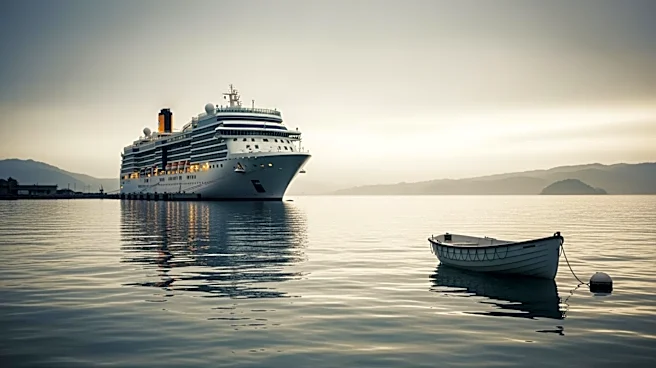
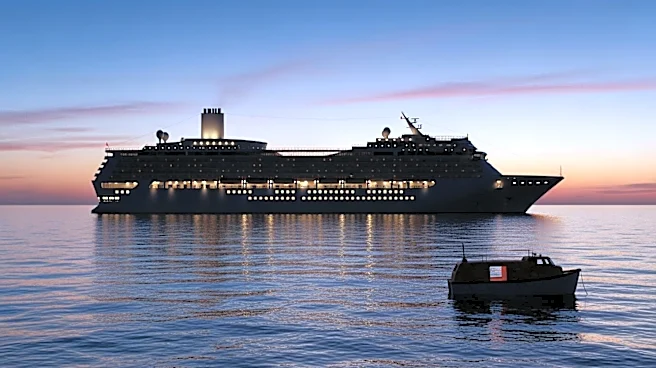
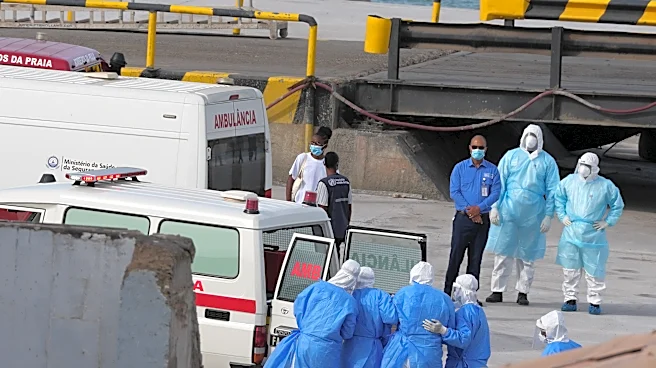
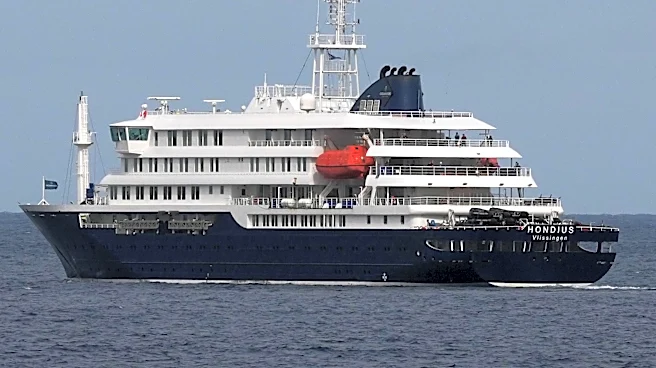
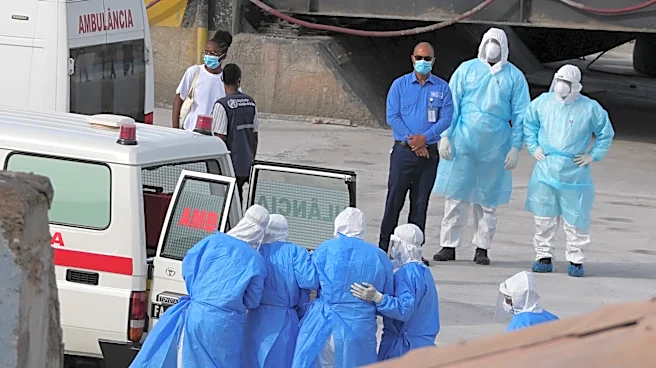
The MV Hondius cruise ship, affected by a hantavirus outbreak, has docked in Tenerife, Spain, where a carefully managed evacuation of passengers is underway. The ship, which left Argentina last month, has been linked to three deaths due to hantavirus,
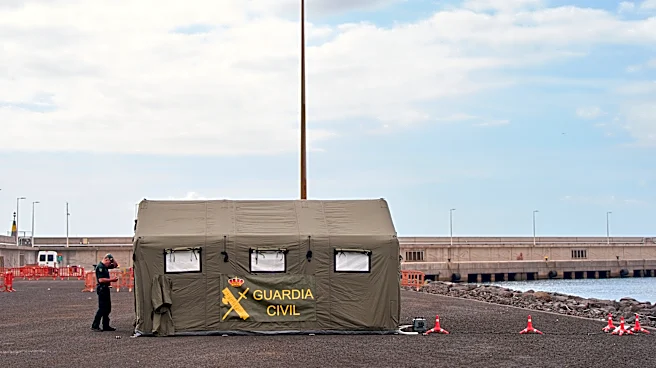
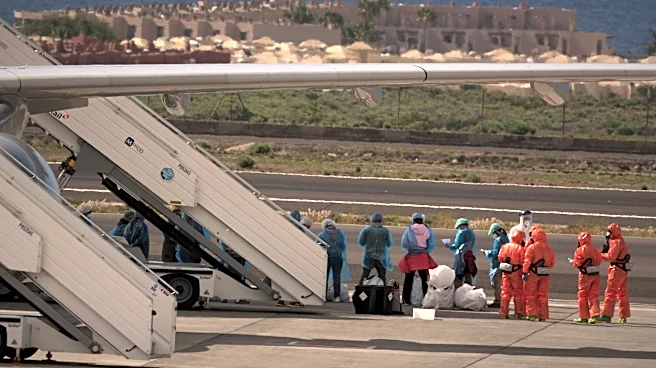
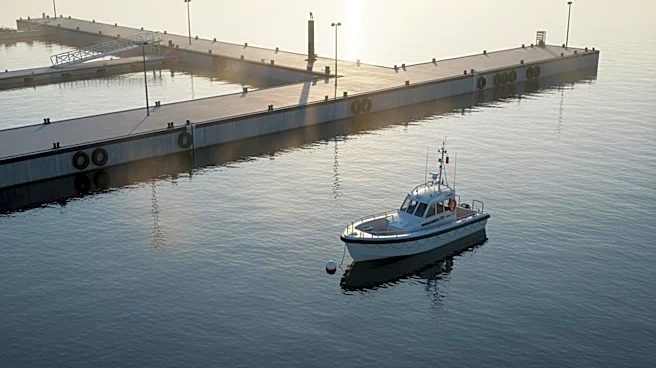
a disease spread by rodents. Spanish health authorities have coordinated the evacuation of 94 passengers from 19 different countries. The World Health Organization has stated that the outbreak poses a low risk to the general public. Passengers were tested for symptoms before being ferried ashore in small boats. They were then transported to the airport for flights back to their home countries. The ship will proceed to Rotterdam for disinfection after the crew disembarks.
Why It's Important?
This incident highlights the vulnerabilities of cruise ships to infectious disease outbreaks and the complexities involved in managing such situations. The international response underscores the importance of global health cooperation in addressing public health emergencies. For the U.S., the event serves as a reminder of the need for effective quarantine measures and monitoring systems to prevent the spread of diseases. The cruise industry may face economic repercussions as potential travelers become wary of health risks, impacting tourism and related sectors. The situation also emphasizes the need for enhanced health protocols on cruise ships to prevent future outbreaks.
What's Next?
The MV Hondius will continue to Rotterdam for disinfection after the crew disembarks. The U.S. Centers for Disease Control and Prevention has arranged for the 18 passengers heading to the U.S. to be monitored at the University of Nebraska Medical Center. These passengers will undergo home-based monitoring for 42 days. The incident may lead to a review of health and safety protocols by cruise lines to prevent future outbreaks. Health agencies like the World Health Organization may issue updated guidelines for managing infectious diseases on cruise ships.