

What's Happening?
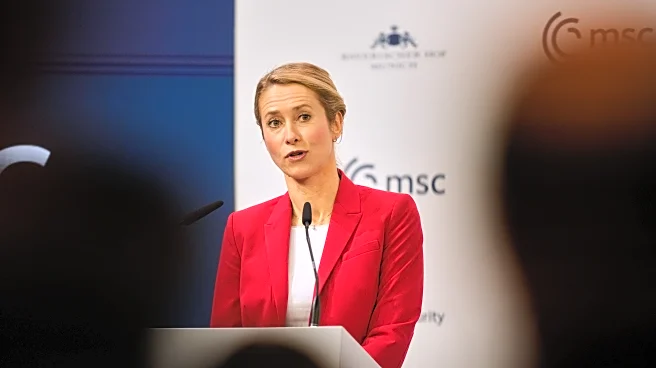
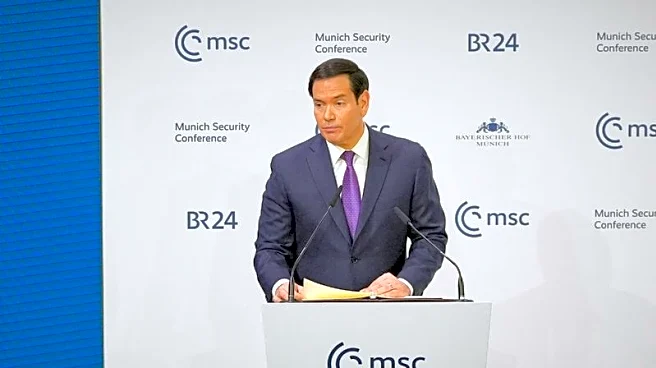
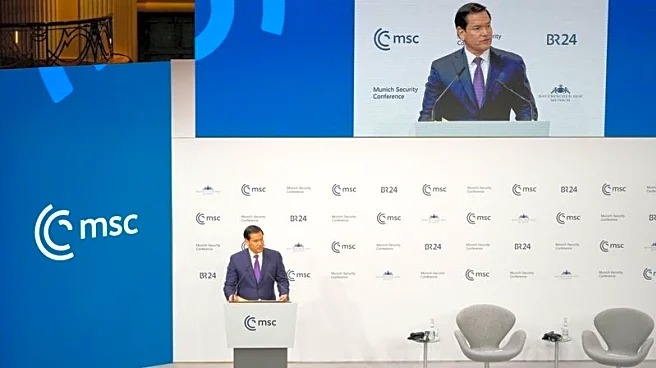
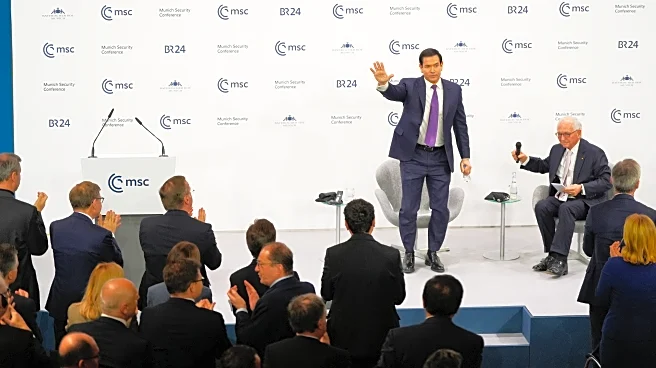
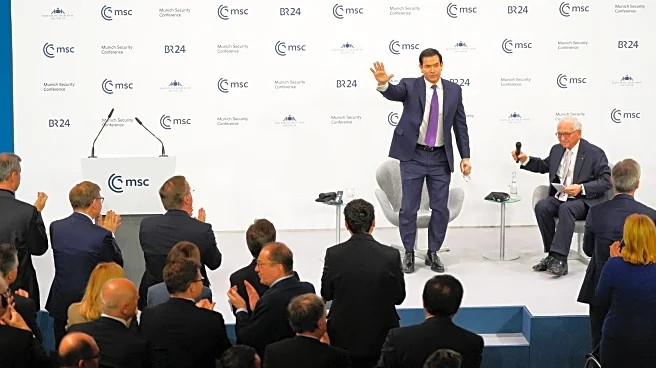
The 62nd Munich Security Conference, held on February 13, 2026, in Munich, Germany, marked a significant shift in focus towards integrating technology into security policy. Historically centered on traditional military and diplomatic issues, this year's
conference emphasized the role of cyber threats and artificial intelligence (AI) as central components of security architecture. European leaders, including German Chancellor Friedrich Merz, highlighted the intertwined nature of digital threats and geopolitical tensions. The conference underscored the need for stronger cyber capabilities and strategic autonomy, with discussions on technological resilience becoming mainstream in security discourse. The event also featured calls from Germany's intelligence leadership for greater latitude in countering hybrid threats, particularly those involving cyber attacks and digital sabotage.
Why It's Important?
The integration of technology into security policy at the Munich Security Conference reflects a broader recognition of the evolving nature of global threats. As digital and geopolitical risks become increasingly intertwined, the emphasis on cyber resilience and AI as strategic assets signals a shift in how national security is perceived and managed. This development has significant implications for U.S. industries and policymakers, as it highlights the need for coordinated public-private responses to protect critical infrastructure. The focus on technological resilience and strategic autonomy may influence investment flows and research and development priorities, particularly in the tech sector. Additionally, the conference's discussions on European autonomy in tech policy could impact trans-Atlantic relations and cooperation in areas such as AI standards and cybersecurity.
What's Next?
Following the conference, European leaders are likely to pursue policies that enhance their technological resilience and strategic autonomy. This may involve increased investment in domestic tech capabilities, the development of sovereign semiconductor supply chains, and the establishment of security cooperation mechanisms similar to intelligence-sharing networks. For the U.S., this could mean navigating a more autonomous Europe in tech policy, potentially affecting collaboration on cybersecurity and AI standards. The emphasis on public-private cooperation and regulatory agendas shaped by security imperatives may also lead to new opportunities and challenges for U.S. tech companies operating in Europe.
Beyond the Headlines
The Munich Security Conference's focus on technology as a pillar of security policy highlights deeper implications for global power dynamics. As Europe seeks to balance alliances with autonomy, the integration of tech into security strategies may redefine traditional defense paradigms. This shift could lead to a reevaluation of international partnerships and influence the global tech landscape, as countries prioritize technological sovereignty and resilience. The conference also raises ethical and legal questions about the role of AI and cyber capabilities in national security, prompting discussions on regulation and governance in the digital age.