


What's Happening?
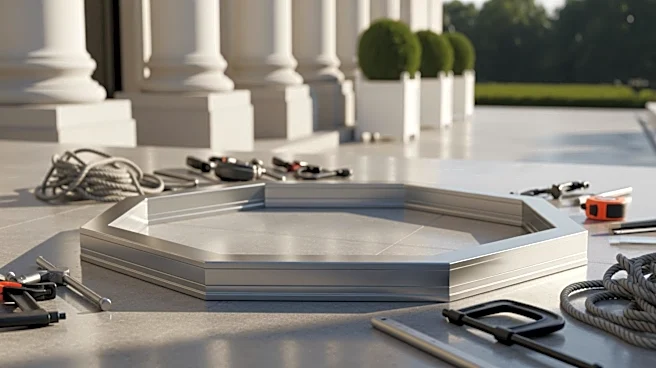
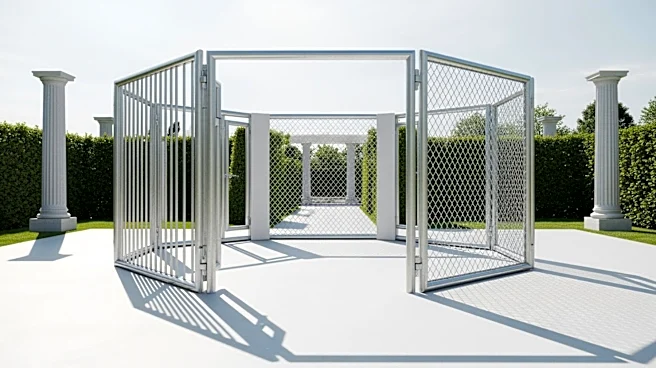
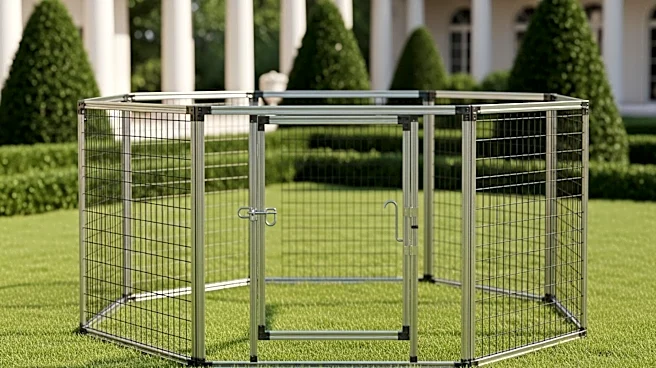
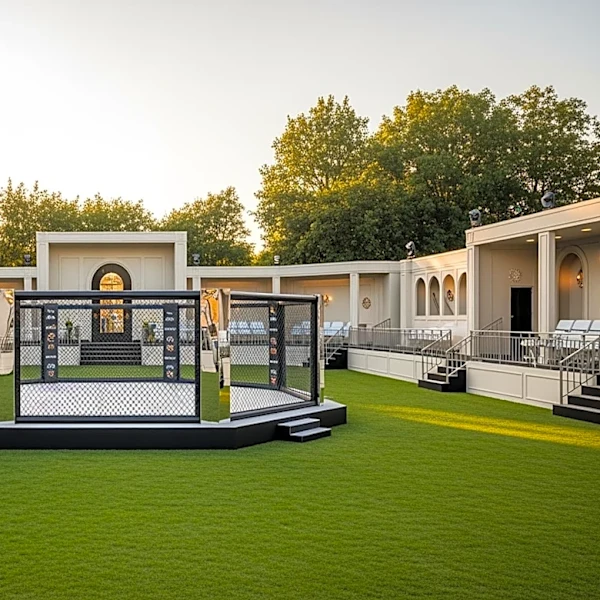
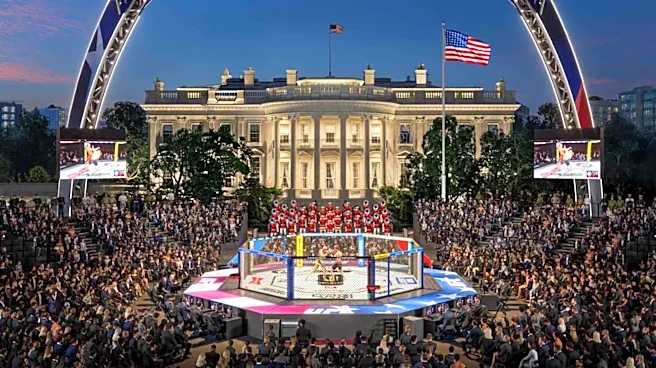
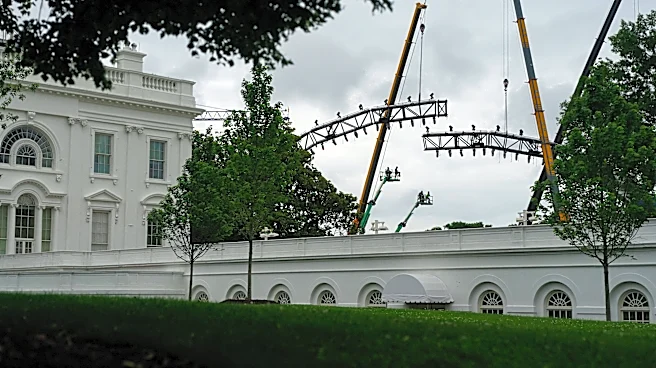
A temporary octagon-shaped cage is being constructed on the South Lawn of the White House to host a UFC bout scheduled for June 14, 2026. This event is part of the celebrations marking the 250th anniversary of the Declaration of Independence and President
Trump's 80th birthday. The setup includes a red, white, and blue stage with large screens for live broadcasting, surrounded by thousands of temporary seats. The UFC plans to issue up to 85,000 free tickets for spectators at the White House and nearby Ellipse. The event will feature two championship fights, including a match between Alex Pereira and Ciryl Gane for the interim UFC heavyweight title, and a bout between Ilia Topuria and Justin Gaethje for the lightweight championship.
Why It's Important?
The construction of a UFC cage on the White House lawn signifies a unique intersection of sports and politics, highlighting the administration's approach to public engagement and celebration of national milestones. This event could boost the visibility of UFC as a sport, potentially increasing its fan base and marketability. It also reflects President Trump's continued influence in blending entertainment with political events, which may impact public perception and engagement with the presidency. The large-scale public event could have economic implications, drawing tourism and media attention to Washington, D.C., and potentially influencing future uses of the White House for similar events.
What's Next?
Following the UFC event, there may be discussions about the appropriateness and impact of using the White House for such large-scale public events. Stakeholders, including political leaders and civil society groups, might debate the implications for presidential decorum and the use of national landmarks. The success of the event could lead to more frequent use of the White House for public entertainment, influencing future presidential administrations' approaches to public engagement.
Beyond the Headlines
The event raises questions about the commercialization of national symbols and the blending of entertainment with political spaces. It may set a precedent for future administrations regarding the use of the White House for non-traditional events. Additionally, the event could spark discussions about the role of sports in national celebrations and the potential for sports to serve as a unifying force in a politically divided nation.