




What's Happening?
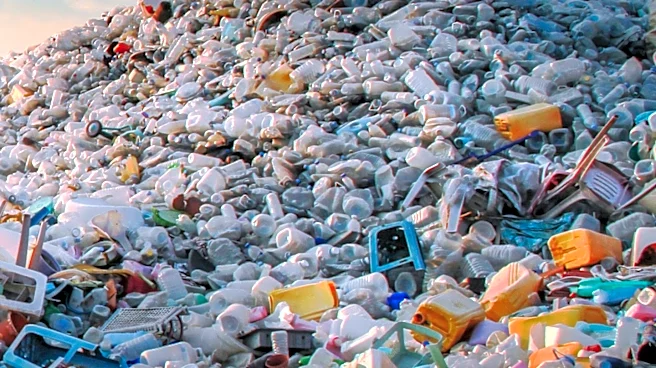
The United States generated approximately 3.3 million U.S. tons of disposable diaper waste in 2018, according to EPA estimates, with these products primarily ending up in landfills. A single plastic disposable diaper is designed for durability, featuring
a plastic outer shell and a super-absorbent polymer core, making it resistant to decomposition. This design means that many disposable diapers from decades ago likely still exist in landfills. The Plastic Pollution Coalition highlights that recycling is not a viable solution for disposable diapers due to several factors: they arrive contaminated, are made of bonded multi-materials that are difficult to separate, and the recovered materials often lack sufficient economic value to offset processing costs. Furthermore, the trend of children staying in diapers longer, partly due to the high absorbency of modern diapers that reduces sensory cues for potty training, exacerbates the waste problem.
Why It's Important?
The substantial volume of disposable diaper waste represents a significant environmental burden in the U.S., contributing to landfill expansion and plastic pollution. The inability to effectively recycle these products means that the environmental impact is long-lasting, with potential consequences for soil and water quality. The extended use of disposable diapers also has societal implications, as it may delay potty training, increasing the overall number of diapers consumed per child. This issue affects public health, as children are particularly vulnerable to the health harms associated with plastics. Addressing this problem requires a shift towards upstream solutions, such as promoting reusable alternatives and encouraging earlier potty training, to reduce the sheer volume of waste generated.
What's Next?
To mitigate the environmental impact of disposable diapers, the focus is shifting towards upstream solutions. This includes encouraging the use of reusable options, such as cloth diapers or hybrid training underwear with removable absorbent inserts. Companies like My Bee Bear are developing products that offer sensory feedback to children, potentially facilitating earlier potty training. Additionally, there is a push to reduce reliance on plastic-based disposables by using cellulose-based alternatives for specific situations like travel or nighttime. Educational initiatives, similar to the UK's updated potty training guidance, which advocates for earlier, gentler introduction to toilet training, could also play a crucial role in reducing the duration children spend in diapers. These efforts aim to decrease the volume of disposable diapers entering landfills and foster more sustainable practices.