
What's Happening?
A study conducted by scientists at the Yong Loo Lin School of Medicine, National University of Singapore, has identified calcium alpha-ketoglutarate (CaAKG) as a promising compound in the fight against
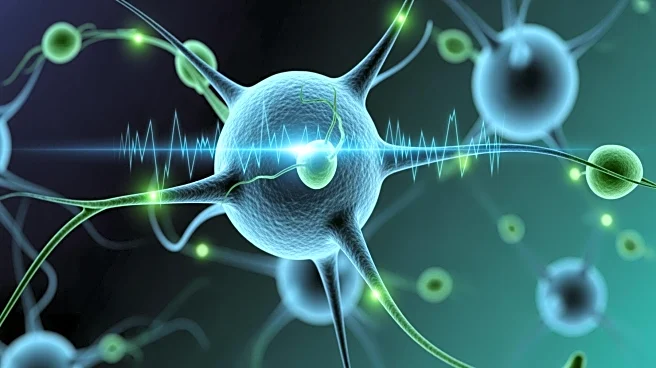
Alzheimer's disease. CaAKG, a naturally occurring metabolite, is known for its role in healthy aging and has now been shown to restore key memory-related brain functions disrupted by Alzheimer's. The research, published in Aging Cell, highlights CaAKG's ability to enhance synaptic plasticity, protect neurons from early degenerative changes, and contribute to healthier cognitive aging. The study also reveals that CaAKG can repair weakened signals between neurons and restore associative memory, which is often one of the first abilities lost in Alzheimer's patients. The compound works by activating specific pathways in the brain, improving neuron flexibility, and boosting autophagy, the brain's natural clean-up system.
Why It's Important?
The discovery of CaAKG's potential in treating Alzheimer's disease is significant as it offers a new approach to managing this neurodegenerative condition. Alzheimer's disease affects millions of people worldwide, and current treatments primarily focus on alleviating symptoms rather than addressing the underlying causes. CaAKG's ability to target aging biology itself rather than individual disease symptoms could lead to more effective and accessible treatments. As CaAKG is already present in the human body, it may offer fewer risks and broader accessibility compared to synthetic drugs. This research could pave the way for new geroprotective strategies that not only slow cognitive decline but also support overall brain health, potentially reducing the burden of Alzheimer's on patients, families, and healthcare systems.
What's Next?
Further research is needed to fully understand the mechanisms by which CaAKG affects brain function and to determine its efficacy and safety in human trials. If successful, CaAKG could become a key component of Alzheimer's treatment regimens, complementing existing therapies. Researchers may also explore the potential of CaAKG in preventing other age-related diseases, given its role in promoting healthy aging. The findings could stimulate interest in developing other natural compounds that target aging processes, potentially leading to a broader range of treatments for neurodegenerative diseases.
Beyond the Headlines
The study's focus on non-coding DNA, often referred to as 'junk DNA', highlights its potential role in controlling brain cells linked to Alzheimer's disease. This could lead to a deeper understanding of genetic factors in neurodegenerative diseases and open new avenues for research. Additionally, the research underscores the importance of targeting aging biology as a whole, rather than individual symptoms, which could revolutionize the approach to treating age-related conditions. The ethical implications of using natural compounds for treatment, as opposed to synthetic drugs, may also be a topic of discussion in the medical community.