




What's Happening?
President Trump's approval rating has reached a new low, particularly concerning his handling of the economy, according to two recent national polls. The CNBC All-America Economic Survey and a Washington Post-Ipsos poll both indicate that a majority of Americans
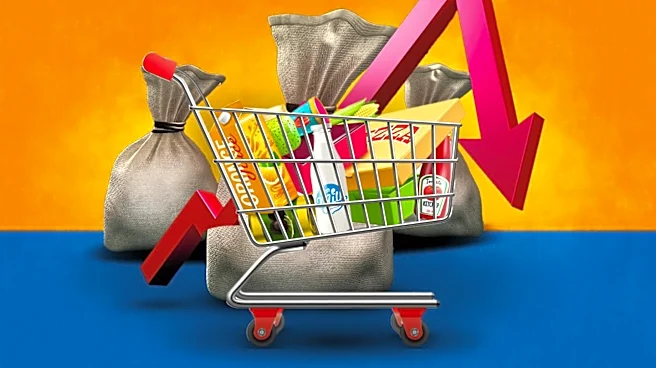
disapprove of Trump's economic management. The CNBC poll shows a 38% approval rating for Trump's economic policies, while the Washington Post-Ipsos poll reports an even lower 33% approval. These figures reflect widespread voter dissatisfaction with the current economic conditions, including concerns over the cost of living and future economic prospects. Despite some improvements in inflation and market conditions, many Americans remain pessimistic about the economy, with 61% expressing a negative outlook in the CNBC survey. This economic sentiment is crucial as the 2026 midterm elections approach, where economic issues are expected to play a significant role.
Why It's Important?
The declining approval ratings for President Trump, especially regarding economic issues, could have significant implications for the upcoming midterm elections. Historically, economic perceptions heavily influence electoral outcomes, and the current pessimism could pose a risk to incumbents and their parties. Despite the negative economic sentiment, the polls suggest that political divisions remain entrenched, with Democrats holding only a slight lead over Republicans in congressional preferences. This indicates that while economic dissatisfaction is high, it has not yet resulted in a major shift in party support. The persistent economic concerns, coupled with entrenched political loyalties, create a complex landscape for both parties as they prepare for the elections.
What's Next?
With less than four months until the midterm elections, both political parties must navigate a challenging environment shaped by economic anxiety and partisan divisions. The ongoing economic concerns are likely to remain a central issue in the electoral campaigns, influencing voter behavior and potentially affecting the balance of power in Congress. Both parties will need to address these economic issues effectively to sway undecided voters and solidify their support base. The outcome of the midterms could hinge on how well each party can convince voters of their ability to manage the economy and improve living conditions.